.png)
Introduction: The Opportunity and the Hidden Risk
Diaspora investment in Zambia is growing steadily, driven by improved economic policy, sector-specific incentives, and a government actively courting foreign capital. For investors abroad, the opportunity appears straightforward. Register a company, meet the investment threshold, and access a range of tax and operational incentives through the Zambia Development Agency.
In practice, it is rarely that simple.
Many diaspora investors enter Zambia with the right intentions but lose out on key benefits due to poor structuring, non-compliance, or misunderstandings about how incentives are applied. Others secure incentives initially but fail to maintain them because they do not meet ongoing requirements.
The result is a costly gap between what is available on paper and what is actually realized in practice.
This guide is designed to close that gap. It explains how diaspora investors can access ZDA incentives, structure investments correctly from abroad, and avoid the common mistakes that lead to lost benefits.
Understanding the ZDA Incentive Framework
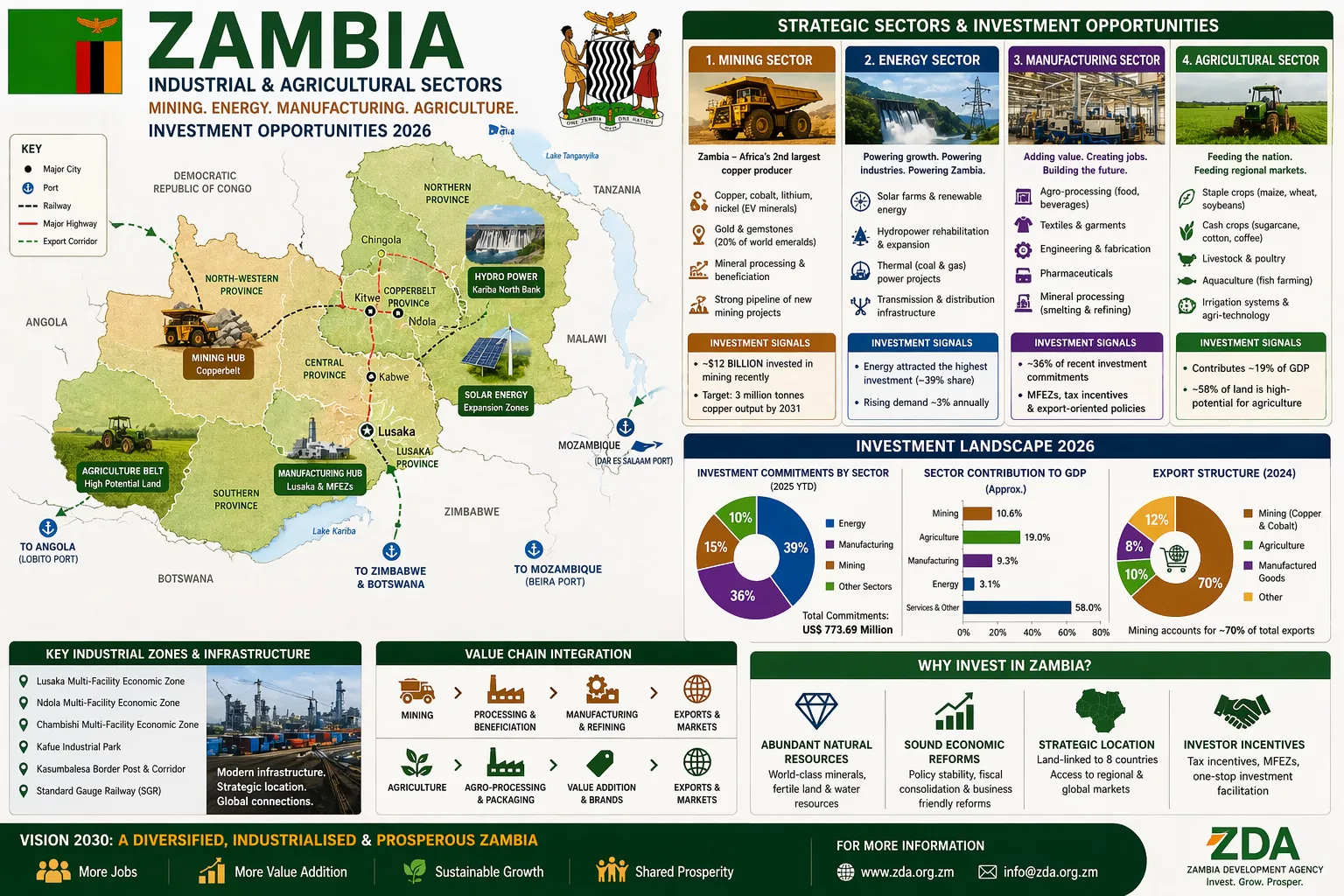
The Zambia Development Agency operates as the central gateway for investment incentives in Zambia. Its mandate is to attract and facilitate both domestic and foreign investment, with a particular focus on priority sectors such as manufacturing, agriculture, energy, and tourism.
Incentives are divided into fiscal and non-fiscal categories. Fiscal incentives include reduced corporate tax rates, tax holidays, and duty exemptions. Non-fiscal incentives cover investment guarantees, facilitation services, and support with licensing and permits.
Access to these incentives is not automatic. Investors must meet minimum capital requirements, typically around $500,000 for foreign investors, and align their projects with designated priority sectors.
For diaspora investors, the key challenge is not understanding what incentives exist, but understanding how to qualify for them while operating remotely.
Structuring Your Investment from Abroad
One of the most common mistakes diaspora investors make is treating Zambia like a plug-and-play investment destination. In reality, the structure of the investment determines whether incentives can be accessed and retained.
The first decision is whether to invest as an individual or through a corporate entity. In most cases, establishing a Zambian-registered company is the preferred route, as it provides a clear legal structure for accessing incentives and engaging with regulators.
The second decision involves ownership structure. Investors must carefully consider how shares are held, particularly when using offshore entities. While offshore structures can offer tax advantages, they can also complicate compliance with local regulations and, in some cases, affect eligibility for incentives.
The third consideration is capital injection. ZDA incentives are tied to actual investment levels, not just declared capital. Funds must be transferred, documented, and deployed in accordance with approved project plans.
For diaspora investors, this process requires coordination between local advisors, financial institutions, and regulatory bodies. Without proper alignment, even well-funded projects can struggle to meet eligibility requirements.
Meeting the Minimum Investment Threshold
The minimum investment threshold is a critical gateway to accessing incentives.
For foreign investors, including diaspora participants, the threshold is typically set at $500,000. This requirement is designed to ensure that investments are of sufficient scale to contribute meaningfully to the economy.
However, meeting the threshold is not just about transferring funds. It involves demonstrating that the investment is being deployed in a way that aligns with the approved project.
This includes capital expenditure on equipment, infrastructure, and operational setup. It also requires maintaining proper records to verify that funds have been used as intended.
Failure to meet or maintain this threshold can result in the withdrawal of incentives, even after they have been granted.
Accessing Tax Incentives Without Losing Them
Tax incentives are one of the most attractive aspects of investing in Zambia, but they are also one of the easiest to lose.
Common incentives include reduced corporate tax rates, tax holidays within Multi-Facility Economic Zones, and exemptions on import duties for capital equipment.
To access these benefits, investors must ensure that their projects are properly registered with the ZDA and, where applicable, located within designated economic zones.
Maintaining these incentives requires ongoing compliance. This includes timely tax filings, adherence to project timelines, and continued operation within the approved sector.
Diaspora investors often encounter challenges here because compliance is managed locally while decision-making occurs abroad. Without strong local oversight, small administrative issues can escalate into compliance failures.
The solution is to establish clear governance structures, including local management teams and professional advisors who can ensure that obligations are met consistently.
Navigating Non-Fiscal Incentives and Operational Support
While tax incentives receive the most attention, non-fiscal incentives often play an equally important role.
The ZDA provides facilitation services that can significantly reduce the complexity of setting up and operating a business. This includes assistance with licensing, land acquisition, and immigration permits for key personnel.
For diaspora investors, these services are particularly valuable. Operating from abroad creates additional layers of complexity, and having a central agency to coordinate processes can save time and reduce risk.
Investment guarantees, including protection against nationalization, also enhance the overall risk profile of projects.
Understanding how to leverage these non-fiscal incentives can improve both the speed and stability of market entry.
Common Mistakes That Lead to Lost Benefits
Many diaspora investors lose incentives not because the system is flawed, but because they underestimate the importance of compliance and structure.
One common issue is incomplete documentation. Incentives are granted based on specific project details, and any discrepancies between what was approved and what is implemented can trigger reviews.
Another issue is delayed project execution. Incentives are often tied to timelines, and delays in construction or operations can lead to penalties or withdrawal of benefits.
Tax compliance is another critical area. Failure to file returns or settle obligations on time can result in the loss of tax incentives, even if the underlying business is performing well.
Finally, reliance on informal arrangements or unverified partners can expose investors to unnecessary risk.
Avoiding these pitfalls requires discipline, transparency, and a willingness to invest in proper advisory support.
The Role of Local Advisors and Institutional Support
Diaspora investors cannot navigate Zambia’s investment landscape effectively without local expertise.
Legal advisors ensure that corporate structures and contracts comply with local laws. Tax consultants help optimize incentive utilization while maintaining compliance. Financial advisors provide guidance on capital deployment and reporting.
Engaging with the Zambia Development Agency early in the process is also critical. The agency can provide clarity on eligibility requirements, sector priorities, and application procedures.
Local banks and professional service firms further support operational setup, including account opening, payroll management, and regulatory filings.
The cost of professional advice is often outweighed by the value of retained incentives and avoided mistakes.
Strategic Sectors for Diaspora Investment
While incentives are available across multiple sectors, certain industries offer particularly strong opportunities for diaspora investors.
Manufacturing remains a priority, supported by tax incentives and access to regional markets. Agriculture offers opportunities in both production and processing, with strong government support for large-scale operations.
Energy, particularly renewable energy, is another area of focus, driven by growing demand and policy support.
Tourism and real estate also present opportunities, particularly in areas linked to infrastructure development and urban expansion.
Selecting the right sector is not just about incentives. It is about aligning investment strategy with market demand and operational capability.
Conclusion: Incentives Reward Structure, Not Assumptions
Diaspora investment in Zambia offers significant potential, supported by a well-defined incentive framework and a government committed to attracting capital.
However, incentives are not guaranteed outcomes. They are conditional benefits that depend on how investments are structured, implemented, and managed.
The difference between investors who succeed and those who struggle often comes down to preparation. Understanding the rules, aligning with local requirements, and maintaining compliance are essential steps.
For diaspora investors, the opportunity is real, but it must be approached with precision.
Call to Action: Secure Your Incentives Before You Invest
If you are planning to invest in Zambia from abroad, do not treat incentives as an afterthought.
Start by mapping out your investment structure, confirming eligibility requirements, and engaging with experienced local advisors. Ensure that your capital deployment aligns with ZDA expectations and that your compliance systems are in place from day one.
The difference between capturing incentives and losing them often lies in the details.
Approach the process strategically, and you can turn Zambia’s incentive framework into a powerful advantage for long-term growth.