.png)
Zambia is losing as much as one-third of its fresh food to heat and handling before it ever reaches the consumer. A well-planned cold storage facility in Zambia can slash those losses, stabilise food prices, and open new export markets. This guide walks you through every major step—from market research to daily operations—so you can build a profitable, food-safe facility that meets local regulations and global best practice.
1. Why Zambia Needs Modern Cold Storage
-
Rising demand: Urban supermarkets, restaurants, and quick-service chains are expanding, yet consistent chilled supply is still limited.
-
Export potential: Complying with strict temperature-control standards unlocks premium markets for Zambian beef, poultry, and horticultural products.
-
Food-security gains: Reducing post-harvest losses directly raises farmer incomes and national food availability.
Transitioning from ad-hoc refrigerated trucks to an integrated temperature-controlled warehouse brings predictability to the entire supply chain.
2. Market Research: Pick Your Niche
-
Meat and poultry for Lusaka’s retail chains
-
Fresh fish for Copperbelt mining towns
-
Mango, avocado, and citrus during export season
-
Supermarket distribution centres
-
Quick-service restaurants with just-in-time delivery models
-
Commercial farmers requiring pre-cooling and consolidation
Talk to potential clients early; their product volumes and temperature profiles determine room sizes, racking height, and door frequency.
3. Write a Bankable Business Plan
A lender-ready plan should capture:
| Section | Key Highlights |
|---|---|
| Capital costs | Land, civil works, insulated panels, refrigeration, generators/solar |
| Operating costs | Power, maintenance, trained staff, cleaning chemicals |
| Revenue model | Per-pallet storage, cross-docking fees, value-added services (blast freezing, packing, labelling) |
| Funding mix | Equity, development-finance loans, vendor credit, strategic partnerships |
Use conservative occupancy assumptions (60-70 % in year 1) and build sensitivity scenarios for power costs and exchange-rate swings.
4. Legal Setup and Food-Safety Compliance
-
Register the company with PACRA and obtain a TPIN from the Zambia Revenue Authority.
-
Secure municipal operating licences (health, fire) and ensure every employee holds a valid Food Handler’s Certificate.
-
Implement HACCP from day one; add ISO 22000 certification as the facility scales and seeks multinational clients.
-
Occupational safety: Draft clear ammonia-handling and emergency-response procedures; train teams annually.
Staying audit-ready wins customer trust and cuts costly shutdowns.
5. Choosing the Right Site and Design
-
Place the warehouse near major highways or rail spurs for low last-mile cost.
-
Reserve additional land for future freezer or ripening-room expansion.
-
Receiving: +10 °C
-
Chilled: 0 °C to +4 °C
-
Frozen: –18 °C to –25 °C
-
Incorporate mobile racking to lift pallet density by up to 40 %.
-
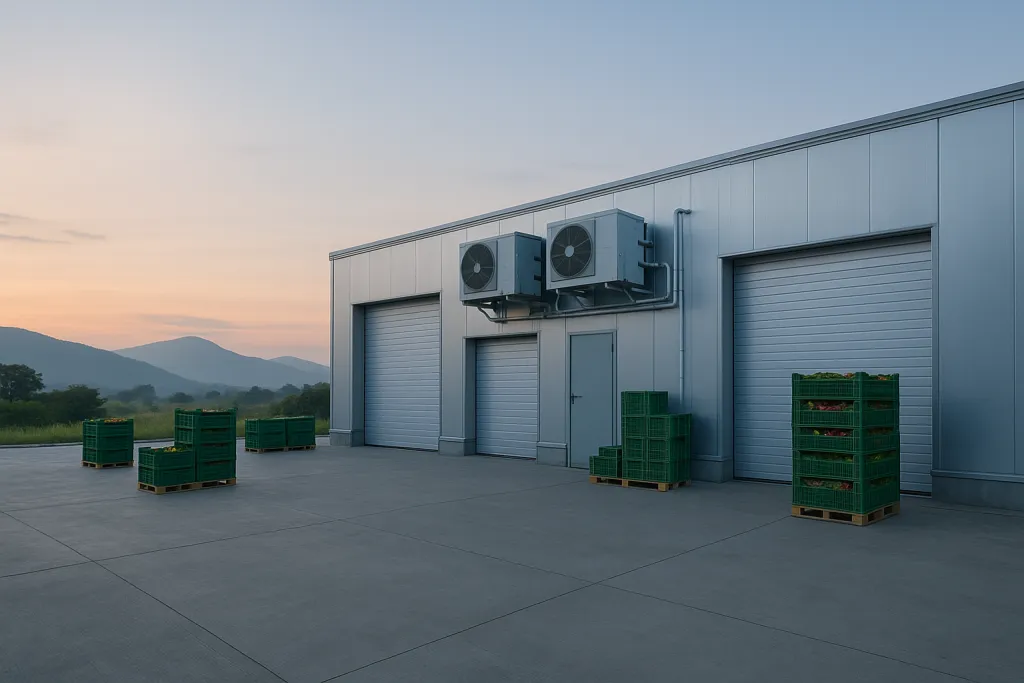
Add raised, covered loading docks to keep product within the cold chain during transfers.
6. Refrigeration and Energy Solutions that Work
Ammonia systems offer high efficiency and lower running costs than HFCs. Pair the plant with:
| Technology | Benefit |
|---|---|
| Variable-speed compressors | Matches load to demand, saving power |
| IoT sensors | Live temperature alerts, automated logs for compliance |
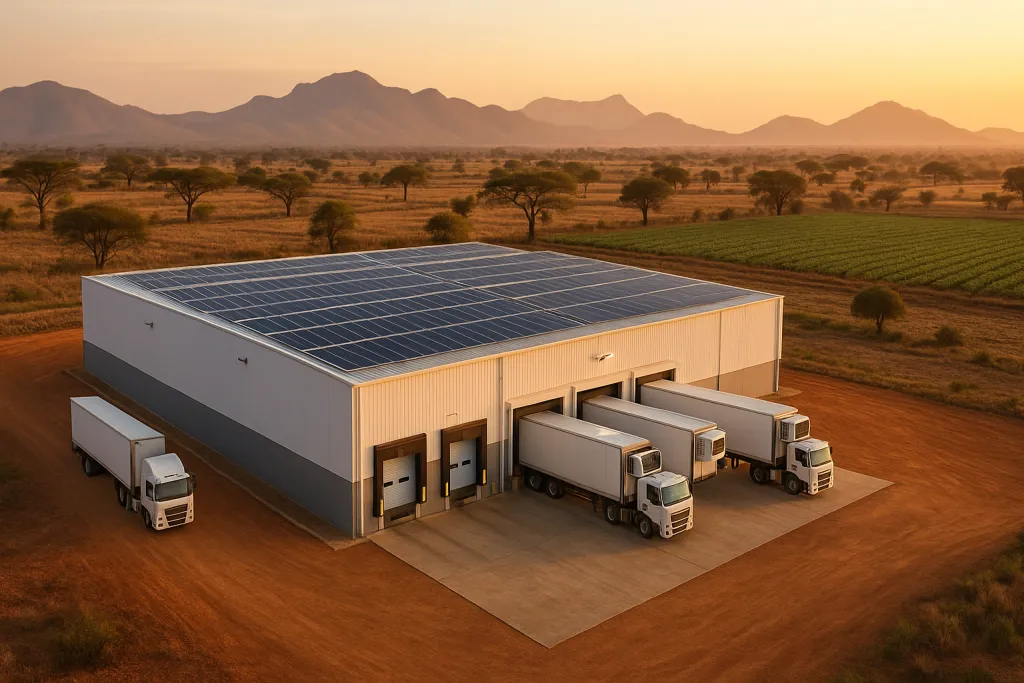
| Solar-diesel hybrid microgrid | Keeps product safe during grid outages |
| Thermal-energy storage tanks | Shift power draw away from peak-tariff hours |
Design for a 1–1.2 kW per pallet energy ratio; anything higher signals poor insulation or oversized motors.
7. Smart Operations: People, Processes, Technology
-
Train technicians to conduct preventive maintenance and quick ammonia leak isolation.
-
Adopt FIFO and barcode scanning to cut write-offs from expired stock.
-
Set clear KPIs: door-open time per truck, pick accuracy, and energy used per kilo stored.
-
Digital dashboards help track pallet ageing and automate customer billing.
Small process tweaks—such as high-speed doors and LED lighting—shave utility bills while boosting productivity.
8. Funding Options and Strategic Partnerships
-
Local banks often co-finance land and civil works if you secure off-take agreements.
-
Development-finance institutions support food-security infrastructure with longer tenors and grace periods.
-
3PL or commodity traders may invest in exchange for guaranteed capacity.
-
“Pay-as-you-chill” models let smallholder farmers rent space by the crate, widening your customer base.
Align repayment schedules with harvest seasons to protect cash flow.
9. Case Study: Lusaka Commercial Cold Store (LCCS)
-
Size & tech: 4 000 m² facility, 5 400 pallet positions, mobile racking, and energy-efficient ammonia refrigeration.
-
Cost: US $12 million, designed for modular expansion.
-
Impact: Cut meat spoilage for local processors by 30 % and created 80 skilled jobs.
-
Lesson: Early investment in robust automation and HACCP shortened the sales cycle with large retailers.
10. Your Next Steps
-
Conduct a detailed feasibility study—include power-supply mapping and client volume commitments.
-
Engage an experienced cold-store design-build contractor to produce stamped drawings and costings.
-
Line up financing while final permits are under review.
-
Order long-lead items (compressors, panels) once financing is secured to keep the build on schedule.
-
Pilot operations with a single temperature zone, then expand in phases as utilisation rises.
Conclusion
Building a cold storage facility in Zambia is capital-intensive, but the payoff is strong: lower food losses, higher farmer earnings, and reliable supplies for a fast-growing consumer market. With a solid plan, strict food-safety systems, and energy-smart technology, you can replicate the success of pioneering projects like LCCS—and position your business at the heart of Zambia’s modern cold chain.