.png)
Zambia occupies a position that no other African nation can claim. It is one of only a handful of countries that hold full membership in both the Common Market for Eastern and Southern Africa and the Southern African Development Community. This dual membership provides businesses with preferential access to a vast regional market spanning twenty-seven countries and over six hundred million consumers. Zambia’s membership in two of Africa’s largest trading blocs is not a bureaucratic curiosity. It is a strategic asset that smart businesses are converting into market share.
The numbers tell a compelling story. Zambia’s total trade rose to six hundred and sixty-three billion kwacha by December 2025, a thirteen percent year-on-year increase from the previous year. Exports climbed from an estimated eleven billion US dollars in 2024 to approximately thirteen billion US dollars in 2025, with monthly export values remaining firmly above one billion US dollars by early 2026. Zambia recorded a two-billion-kwacha trade surplus with its fellow dual SADC-COMESA members in April 2025 alone. The direction of travel is unmistakable: Zambia is strengthening its productive capacity and deepening its integration with regional markets.
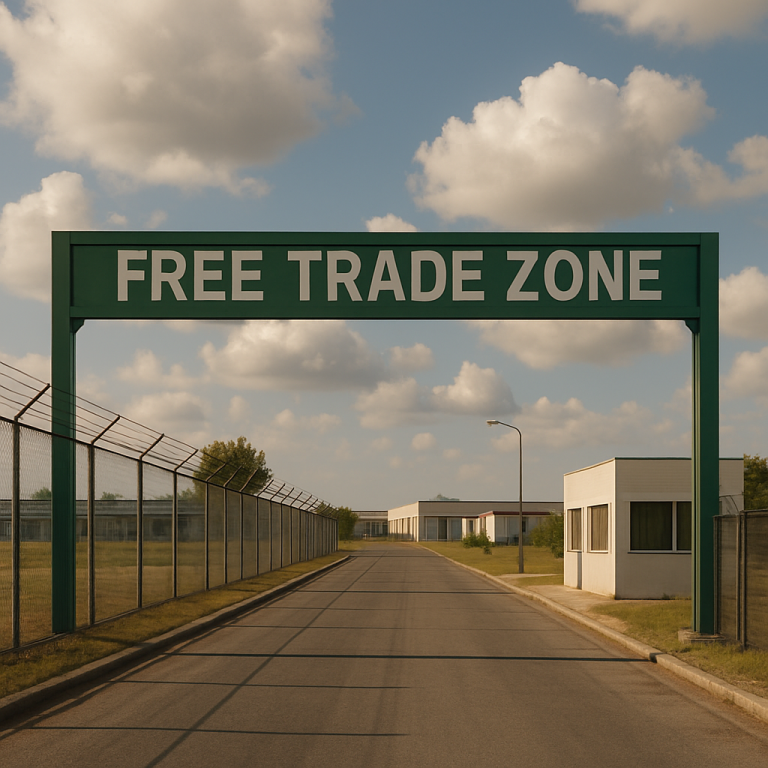
The COMESA free trade area, which includes thirteen implementing member states, eliminates tariffs on goods originating within the bloc. Zambia sits at the heart of this arrangement, hosting the COMESA headquarters in Lusaka and benefiting from preferential access to markets as diverse as Egypt, Kenya, Mauritius, and the Democratic Republic of Congo. COMESA recently launched an electronic certificate of origin system to replace manual certificates and reduce clearance times at border crossings, ensuring that goods originating from member states qualify for preferential tariff treatment with less friction.
SADC offers a parallel but distinct set of advantages. The SADC Protocol on Trade achieved full tariff liberalisation in 2012 when the phase-down process for sensitive products was completed. Goods meeting SADC rules of origin now enjoy duty-free and quota-free access across the bloc, which includes South Africa, Tanzania, Botswana, Namibia, and Zimbabwe. For Zambian businesses, this means a single manufacturing facility can serve customers in Johannesburg, Dar es Salaam, and Gaborone on equal tariff terms.
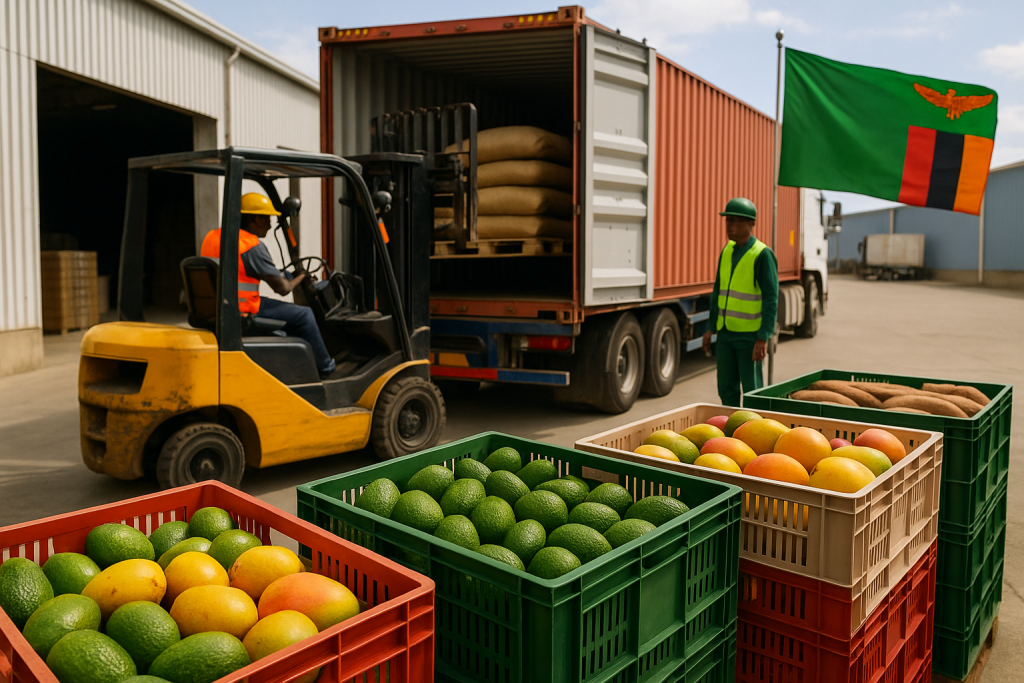
The infrastructure to support this regional trade is undergoing rapid transformation. In early 2026, Zambia signed key regional corridor agreements at the SADC Secretariat relating to some of the most strategic transport and trade corridors in the region. The agreements aim to improve freight transport efficiency, promote intra-regional and international trade, and support the transformation of transport corridors into smart economic corridors. Zambia has also reaffirmed its commitment to developing the Lobito and Nacala Corridors, which will link the Copperbelt to Atlantic and Indian Ocean ports respectively.
The Lobito Corridor is particularly significant. This initiative, jointly pursued by Zambia, Angola, and the Democratic Republic of Congo, will provide Zambian exporters with a faster and more cost-effective route to global markets, reducing dependence on southern and eastern trade channels. The corridor presents major investment opportunities to expand export capacity and deepen regional economic integration. Beyond minerals, the renewed corridor infrastructure could unlock export opportunities for agrifood value chains and promote inclusive prosperity across the region.
Border efficiency is improving in tandem with corridor development. Zambia and the Democratic Republic of Congo recently signed a bilateral agreement to enhance trade through One Stop Border Posts. The agreement is expected to reduce congestion and waiting times, lower trade and transport costs, improve the movement of goods and people, and enhance security and coordination between border agencies. For businesses moving products across the region, these improvements translate directly into lower logistics costs and faster delivery times.
The simplified trade regime offers a dedicated pathway for smaller businesses. COMESA designed this mechanism in 2010 to assist small-scale cross-border traders in accessing the privileges of the free trade area and reducing time spent at borders through simplified procedures. The Tripartite Simplified Trade Regime, now being piloted across COMESA, the East African Community, and SADC, introduces a harmonised system with a common list of eligible products, simplified documentation, and predictable procedures. For women and youth traders who make up a significant portion of cross-border commerce, this framework ensures they are not left behind as regional integration accelerates.
Navigating the two trade blocs requires understanding their distinct rules of origin. To claim preferential treatment under SADC, goods must meet the origin criteria set out in Annex I of the SADC Protocol on Trade. Under COMESA, the rules are governed by the COMESA Protocol on Rules of Origin, which the Secretariat is currently modernising to align with contemporary trade realities. For businesses manufacturing in Zambia, the key is ensuring that sufficient transformation occurs locally to confer origin status. This may involve adjusting supply chains to source more inputs from within the respective bloc.
The dual membership creates opportunities that single-bloc members cannot replicate. A Zambian business can import raw materials duty-free from COMESA partners, process them locally, and export finished goods tariff-free to SADC markets. This arbitrage is not theoretical. It is the foundation of regional value chains that are increasingly attracting multinational investment into Zambian special economic zones. The Lusaka South Multi-Facility Economic Zone and the Chambishi MFEZ are already home to firms that use Zambia as a manufacturing and distribution hub serving both blocs simultaneously.
The African Continental Free Trade Area adds a further layer of opportunity. The AfCFTA is projected to boost intra-African trade significantly, and Zambia’s experience navigating multiple regional economic communities positions it as a natural hub for businesses seeking to access the broader continental market. The AU Chairperson recently underscored the urgency of fully operationalising the AfCFTA and urged regional economic communities to eliminate non-tariff barriers and implement technical provisions to enable seamless intra-African trade.
Challenges remain. Overlapping membership in SADC and COMESA presents economic and legal complexities that require careful navigation. While Zambia is an active participant and reaps benefits in both regional communities, businesses must ensure compliance with two distinct regulatory regimes. The COMESA Secretariat has warned of potential trade turmoil from external shocks, including US tariffs affecting eight-member states, and is encouraging members to increase intra-Africa trade as a buffer. For Zambian businesses, this reinforces the strategic logic of deepening regional integration rather than relying on distant export markets.
The path forward for businesses looking to scale regionally is clear. First, incorporate in Zambia and secure the necessary investment licences and tax clearance. Second, map your supply chain against COMESA and SADC rules of origin to identify opportunities for preferential treatment. Third, identify which of the seven Multi-Facility Economic Zones best aligns with your sector and logistics requirements. Fourth, engage with the Zambia Development Agency to access investment incentives and trade facilitation support. Fifth, build relationships with logistics providers operating along the Lobito, Nacala, and North-South corridors to secure competitive freight rates
Conclusion.
Zambia is not simply a market of twenty million people. It is a land-linked hub with direct road access to the Democratic Republic of Congo, Angola, Tanzania, Malawi, and the broader SADC and COMESA regions. It is the only country that can offer preferential access to both the Cape Town and Cairo ends of the continent from a single warehouse. For businesses that understand how to leverage this unique position, the rewards are not marginal improvements in market access. They are transformative. The gateway is open. The question is whether you will walk through it.