.png)
Imagine running a manufacturing business where you pay absolutely zero corporate income tax for the first ten years of operation. Picture importing millions of dollars’ worth of machinery and raw materials without paying a single kwacha in customs duty. Envision repatriating every dollar of profit without the taxman taking a slice. This is not a fantasy; it is the daily reality for businesses operating inside Zambia’s Multi-Facility Economic Zones, or MFEZs. The question is not whether these incentives exist. The question is whether you are positioned to claim them.
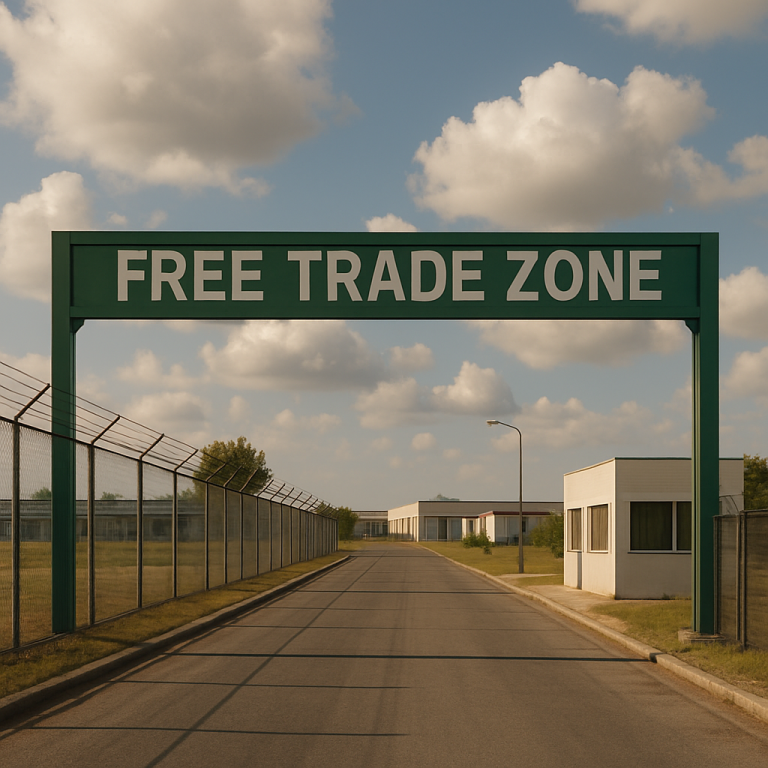
For more than a decade, the Government of Zambia has actively supported the development of special economic zones, creating enabling environments with well-appointed infrastructure designated for both export-oriented and domestic-oriented industries. The country currently operates seven functional Special Economic Zones, comprising five MFEZs and two Industrial Parks, each with backbone infrastructure including electricity, water, telecommunications, and roads. These zones are not remote outposts; they are strategically located across the country’s most economically vital regions.
The Lusaka South Multi-Facility Economic Zone, the only government-owned SEZ, sprawls across two thousand one hundred hectares south of the capital and serves as a flagship for the program. To the north, the Chambishi MFEZ—the first economic zone established by China in Africa—operates as a massive hub where nearly fifty firms and over eight thousand workers drive industrial output daily. The Kalumbila MFEZ in North-Western Province stands out as a modern, planned town with an exciting future as a model for sustainable, mining-led growth. Other designated zones include Jiangxi, Lusaka East, Lumwana, and the industrial parks at Ndola and Roma, each catering to specific industrial niches from gemstone exchange to light manufacturing.
What makes these zones so compelling is the sheer scale of the incentives on offer. The headline attraction is a ten-year corporate tax holiday. Export-oriented manufacturers in an MFEZ pay zero percent income tax for a full decade. After that, the rate only climbs to fifty percent of the normal rate for years eleven through thirteen, and seventy-five percent for years fourteen and fifteen. This graduated approach gives businesses a decade and a half of preferential treatment, enough time to achieve scale and profitability before facing the full corporate tax burden. For companies focused on export markets, the benefits extend even further. Dividends generated from export earnings are taxed at zero percent for the first ten years, a provision that makes MFEZs exceptionally attractive for foreign investors seeking to repatriate profits without leakage.
Beyond corporate income tax relief, the customs and import regime inside MFEZs is designed to minimize upfront capital costs. Investors enjoy zero percent import duty on capital equipment for several years, alongside accelerated depreciation on industrial assets and VAT deferment on selected equipment. For manufacturers, this can mean the difference between a project that clears the hurdle rate and one that stalls. Machinery, construction materials, and even raw materials for processing can enter the zone duty-free, dramatically lowering the initial investment required to establish operations. Sector-specific sweeteners add further layers of benefit. Energy sector investors receive customs duty exemptions on infrastructure equipment and can claim VAT refunds prior to commencing operations. Mining ventures benefit from loss carry-forward provisions extending up to ten years, generous capital allowances, and zero withholding tax on dividends.
The strategic location of these zones amplifies their value. A manufacturing plant inside a Zambian MFEZ is not merely serving the local market of twenty million people; it is positioned as a gateway to the entire Southern African Development Community, the Common Market for Eastern and Southern Africa, and the emerging African Continental Free Trade Area. One facility in Lusaka or Chambishi grants tariff-free access to over five hundred and fifty million consumers across the continent. This is not a peripheral advantage; it is the core strategic logic for many multinationals establishing a regional footprint. The Kalumbila MFEZ, sitting near major mines and key trade corridors into the Democratic Republic of Congo, Angola, and Namibia, exemplifies this positioning as both a logistics and commercial gateway.
The real-world impact of these zones is already materializing. The Lusaka South MFEZ recently declared a dividend of over ten million kwacha to the Industrial Development Corporation for the 2024 financial year, its fourth consecutive payout and a sixfold increase from the previous year’s one-point-five million kwacha. In the same zone, sixteen investors committed one hundred and thirty million US dollars in 2024 alone, targeting sectors including chemical fertilizers, agro-processing, and recycling, with projected job creation of five thousand five hundred positions over three years. A fifty-million-dollar agreement with Varun Food Beverages Zambia Limited will establish a state-of-the-art manufacturing facility for the Carlsberg beer range, creating nearly a thousand new jobs. At Chambishi, the numbers are even more striking: thirty-eight companies have invested a combined one-point-four billion US dollars, demonstrating the scale at which serious industrial players are engaging with the MFEZ model.
Accessing these benefits requires navigating a structured but investor-friendly process. Foreign investors must clear several gates before unlocking incentives, including demonstrating a minimum capital commitment—typically two hundred and fifty thousand US dollars for MFEZ projects—and presenting a five-year business plan that shows export potential, job creation targets, and local supply linkages. The Zambia Development Agency acts as a one-stop shop, issuing investment certificates and coordinating with other government bodies. Well-prepared investors often move from application to site handover in sixty to ninety days, a timeline that compares favourably with many competing jurisdictions.
The policy has not been without controversy. The announcement of ten-year tax holidays for foreign investors triggered sharp public reactions, with many Zambians questioning why external capital receives preferential treatment that local businesses rarely enjoy. Critics point to past experiences in the mining sector, where generous tax concessions did not always translate into proportional benefits or widespread economic transformation. These are legitimate concerns that underscore the importance of transparency and conditionality in incentive programs. The government’s response has been to emphasize that tax holidays are a strategic tool to attract capital-intensive projects that Zambia cannot finance alone, particularly in mining and energy, where the country targets three million metric tonnes of copper production by 2031 and urgently needs new power generation capacity following drought-driven shortages.
For businesses evaluating whether to establish operations inside an MFEZ, the calculus goes beyond the raw financial incentives. The zones offer purpose-built infrastructure that eliminates many of the operational headaches that plague greenfield developments elsewhere. Internal roads, three-phase power, metered water, fibre optic connectivity, and twenty-four-hour security patrols are standard. A single-window desk inside each zone coordinates immigration, environmental, and building approvals, cutting through the bureaucratic red tape that can strangle projects in their infancy. Land leases typically run for ninety-nine years and are renewable, providing the long-term security that capital-intensive industries demand.
Conclusion
The question investors must answer is straightforward but profound. Are you building your African industrial strategy with one hand tied behind your back? The incentives embedded in Zambia’s MFEZ framework are not marginal perks; they are transformative advantages that can reshape the economics of an entire project. A ten-year tax holiday combined with duty-free capital imports and zero dividend withholding tax on export earnings creates a financial runway that few other jurisdictions on the continent can match. For manufacturers, agro-processors, miners, and logistics firms looking to establish a regional hub, the cost of not understanding these incentives may far exceed the cost of pursuing them. The door is open. The terms are published. The only remaining question is whether you will walk through it.