.png)
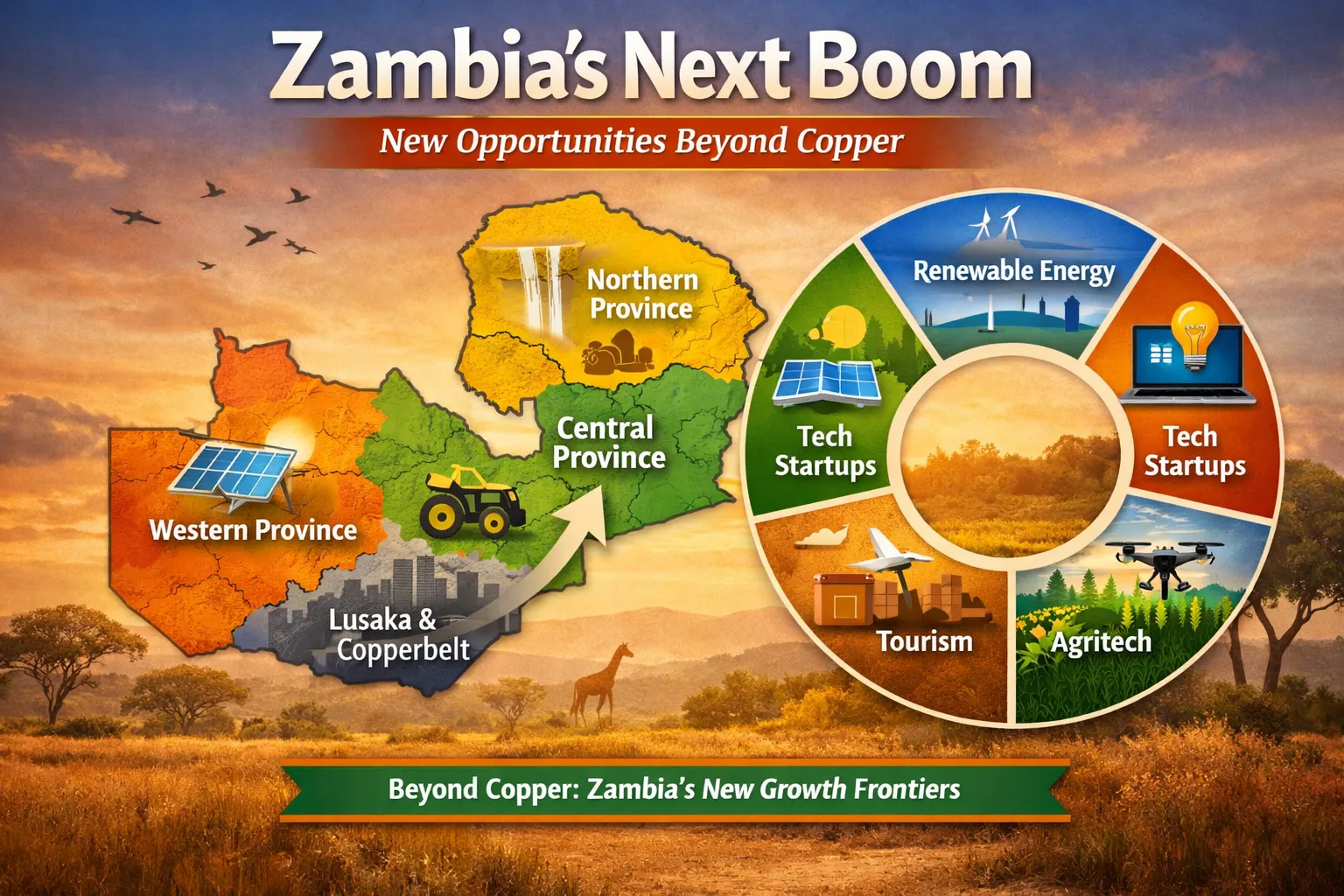
Introduction: Looking Beyond the Obvious
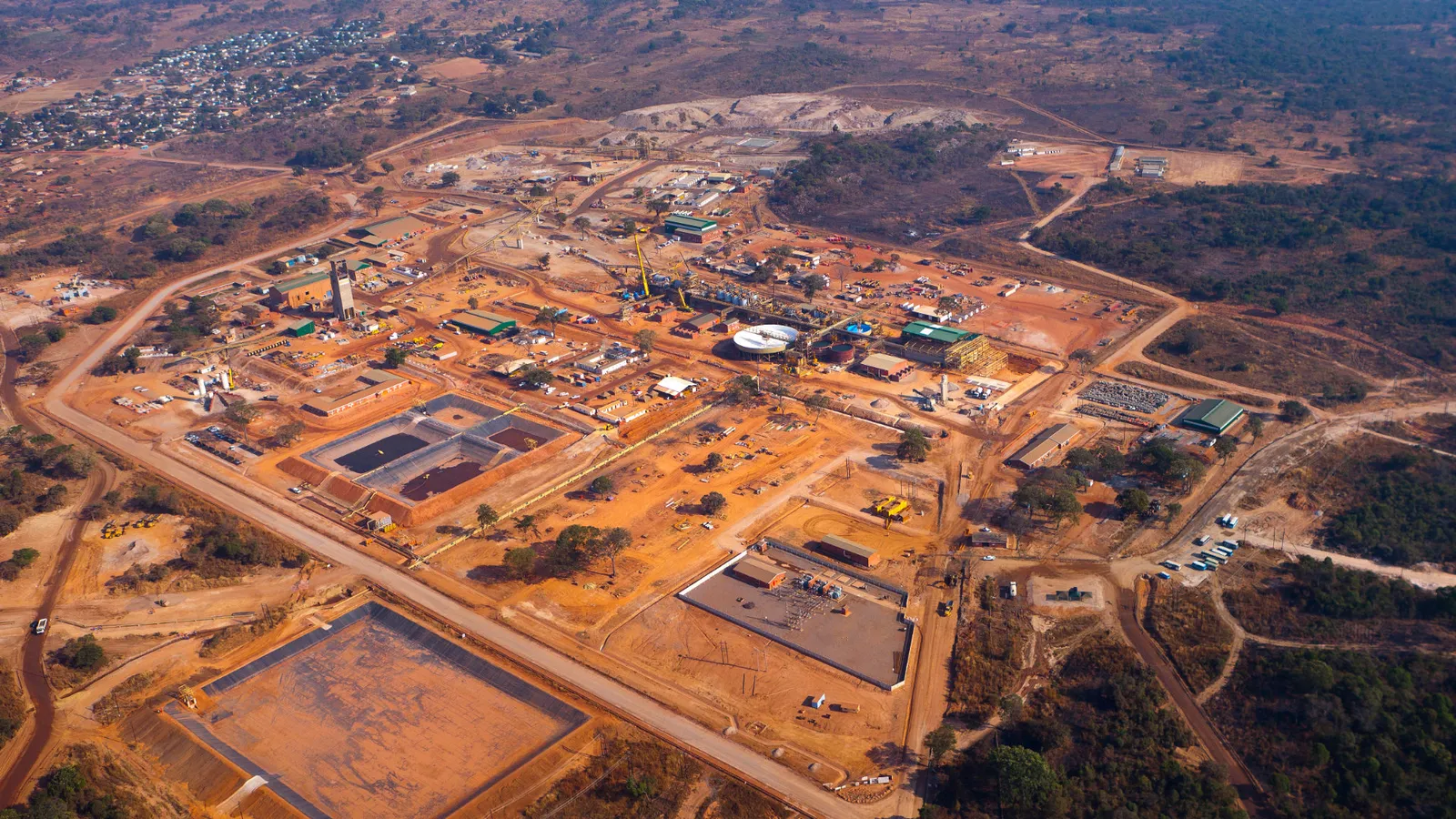
For decades, the economic narrative of Zambia has been anchored in one word: copper.
It is still central. It still matters. And it will continue to shape the country’s economic trajectory.
But if you are only looking at copper, you are already behind.
Zambia’s next boom will not come from where most investors are currently focused. It will come from the spaces around the headline sectors—the parts of the economy that enable, support, and multiply value.
1. The Limits of the Traditional Narrative
Copper dominates attention because it is visible, export-driven, and globally relevant.
But reliance on a single narrative creates blind spots:
- Overconcentration of capital
- Limited diversification
- Missed opportunities in adjacent sectors
The next phase of growth will not replace mining, it will build around it.
2. The Real Opportunity: Value Chains, Not Commodities
The biggest gains are not in extracting more, they are in doing more with what is already extracted.
Key opportunities include:
- Processing and refining of minerals
- Industrial services supporting mining operations
- Manufacturing inputs linked to resource sectors
These areas often receive less attention but offer higher value capture and longer-term stability.
3. Energy: From Constraint to Catalyst
Power shortages are often cited as a major barrier in Zambia.
But constraints create markets.
- Demand for reliable power is rising
- Businesses are investing in alternative energy solutions
- Private sector participation in energy is expanding
Energy is shifting from being a limitation to becoming a core investment sector in its own right.
4. Logistics and Trade Infrastructure
Zambia’s geographic position is one of its most underleveraged advantages.
As a land-linked economy, it sits at the centre of regional trade routes.
Opportunities are growing in:
- Transport and warehousing
- Cross-border logistics
- Supply chain coordination
As trade volumes increase, the businesses that move goods—not just produce them, will capture significant value.
5. The SME Layer: Where Real Growth Happens
Large-scale industries often dominate headlines, but small and medium-sized enterprises (SMEs) are where broad-based growth occurs.
Key trends include:
- Expansion of service-based businesses
- Growth in agro-processing and local manufacturing
- Increasing formalization of previously informal operations
This layer of the economy is fragmented—but that fragmentation itself is an opportunity.
6. Digital and Financial Infrastructure
Digital adoption is quietly transforming how business operates.
- Mobile payments and fintech solutions are expanding
- Businesses are adopting digital tools for operations and sales
- Financial inclusion is improving
These shifts are not always visible at a macro level, but they are reshaping how value is created and captured.
7. The Shift from Extraction to Ecosystem
Zambia’s next boom is not a single sector. It is an ecosystem effect.
It comes from the interaction between:
- Resources
- Infrastructure
- Services
- Technology
When these elements align, they create compounding growth, far beyond what any one sector can achieve on its own.
8. Why Many Investors Will Miss It
The next wave of opportunity is less obvious because it is:
- Less centralized
- More fragmented
- More operational than extractive
Investors focused only on large, visible sectors may overlook:
- Mid-market opportunities
- Service-based value chains
- Enabling infrastructure
By the time these areas become obvious, much of the early advantage will be gone.
Conclusion: The Boom Beneath the Surface
Zambia’s future growth will not be defined solely by what it produces, but by how it builds around what it produces.
The next boom will come from:
- Value addition
- Infrastructure development
- SME expansion
- Integrated supply chains
It will be quieter than a commodity surge—but more sustainable.
Those who recognize this shift early will be positioned ahead of the curve in Zambia.
Call to Action
The most valuable opportunities are often not the most visible.
Investors and businesses should look beyond headline sectors and explore where value is being created across the broader economic ecosystem.
Engage with emerging industries, build partnerships, and position strategically within Zambia’s evolving market.
Look deeper. Move earlier. Build where the next boom is forming.