.png)
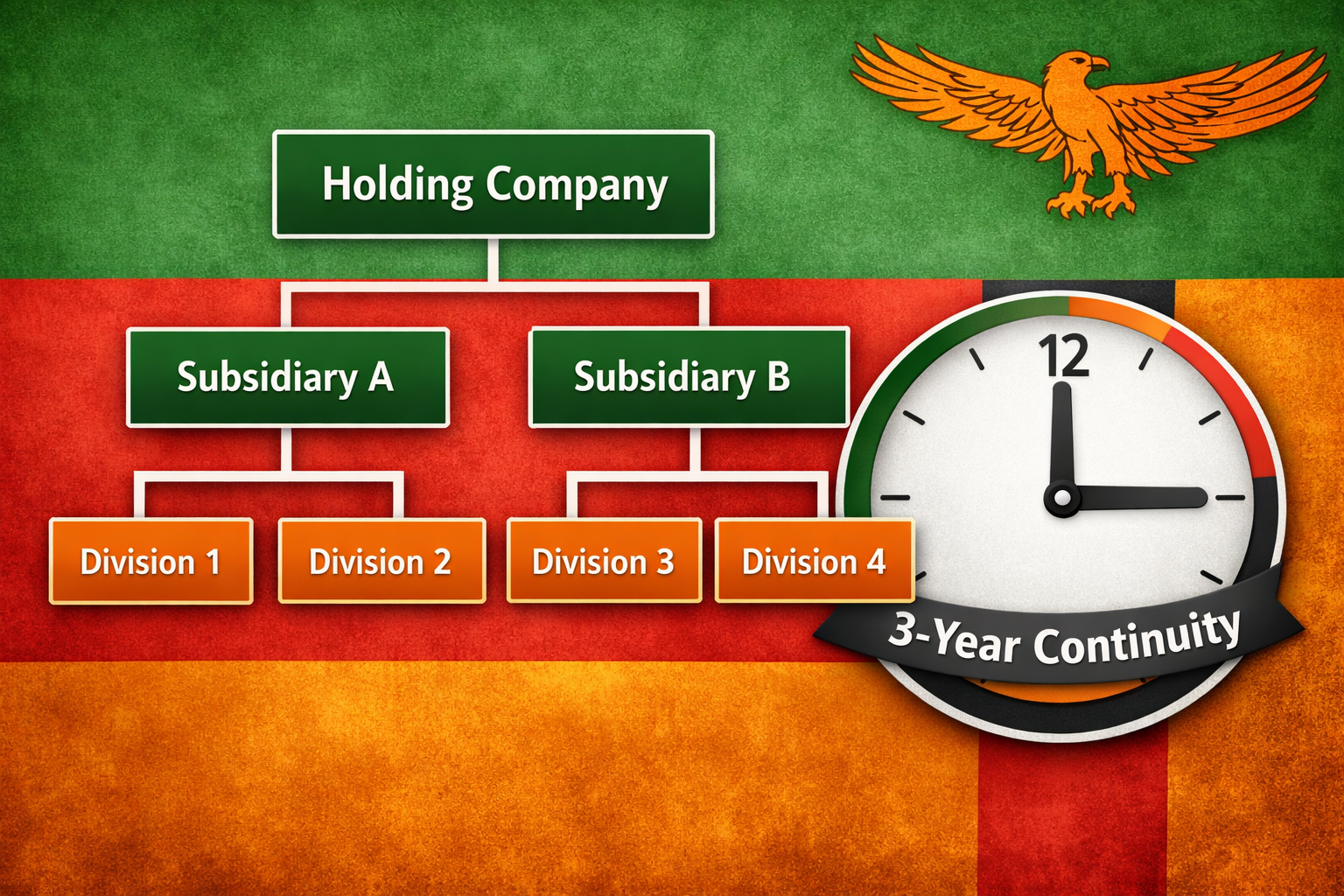
Corporate restructuring is a common strategy for improving efficiency, unlocking value, and preparing businesses for growth. However, in Zambia, such reorganisations can trigger significant tax liabilities, particularly Property Transfer Tax (PTT).
To address this, Zambia has introduced Group Reorganisation Relief under its PTT framework. While this relief offers substantial benefits, recent rule changes have made compliance more complex and more strictly enforced.
For corporate groups operating in Zambia, understanding these new rules is critical. This guide explains how the relief works, who qualifies, and how to avoid costly mistakes.
What Is Property Transfer Tax (PTT) in Zambia?
Property Transfer Tax is a tax levied on the transfer of property, including:
- Land and buildings
- Shares in Zambian companies
- Intellectual property (in certain cases)
Standard PTT Rates (Indicative):
- Land and buildings: 5%
- Shares: 0.5%
- Intellectual property: up to 5%
PTT is typically triggered when ownership changes, making corporate restructurings potentially expensive.
What Is Group Reorganisation Relief?
Group Reorganisation Relief allows qualifying companies to transfer property within the same corporate group without incurring immediate PTT liabilities.
Core Objective:
- Facilitate internal restructuring
- Avoid penalising businesses for non-commercial transfers
- Promote investment and operational efficiency
However, this relief is not automatic, it comes with strict conditions.
Key Eligibility Criteria
To qualify for PTT group reorganisation relief in Zambia, companies must meet several requirements.
1. Group Relationship Test
- Entities must be part of the same corporate group
- Typically defined by majority ownership (often 50% or more)
2. Continuity of Ownership
- The ownership structure must remain substantially unchanged after the transfer
- Prevents abuse through temporary group arrangements
3. Qualifying Transactions
- Transfers must be for genuine restructuring purposes, not tax avoidance
- Includes mergers, internal asset transfers, and share reorganisations
4. Approval Requirements
- Relief often requires approval from the Zambia Revenue Authority (ZRA)
Failure to meet any of these conditions can result in denial of relief.
What Has Changed? New Rules and Tighter Controls
Recent updates to Zambia’s tax framework have tightened how this relief is applied.
1. Enhanced Anti-Avoidance Measures
Authorities now scrutinise:
- Artificial group structures
- Short-term ownership arrangements
- Transactions lacking commercial substance
2. Clawback Provisions
If conditions are breached after relief is granted:
- Deferred PTT becomes payable
- Penalties and interest may apply
Example:
If a company transfers assets tax-free and then exits the group shortly after, the relief may be reversed.
3. Documentation Requirements
Companies must now provide:
- Detailed group structure charts
- Transaction rationale
- Board resolutions and agreements
Poor documentation is a leading cause of rejected applications.
4. Stricter ZRA Oversight
The Zambia Revenue Authority (ZRA) has increased:
- Audit activity
- Compliance reviews
- Enforcement actions
This signals a shift toward stricter tax governance.
How the Relief Works in Practice
Step-by-Step Process:
- Identify qualifying restructuring transaction
- Assess eligibility against criteria
- Prepare supporting documentation
- Apply for ZRA approval
- Execute transfer upon approval
- Maintain compliance post-transaction
Strategic Benefits of the Relief
When used correctly, the relief offers significant advantages.
1. Cost Efficiency
- Avoids immediate PTT liabilities
- Improves cash flow
2. Business Flexibility
- Enables internal restructuring
- Supports mergers and acquisitions
3. Investment Facilitation
- Makes Zambia more attractive for corporate groups
Risks and Challenges
Despite its benefits, the relief carries notable risks.
1. Compliance Risk
- Misinterpretation of rules
- Failure to meet conditions
2. Post-Transaction Monitoring
- Ongoing compliance is required
- Changes in ownership can trigger clawbacks
3. Regulatory Uncertainty
- Rules may evolve
- Interpretation may vary
Best Practices for Corporate Groups
To maximize benefits and minimize risks, companies should adopt a proactive approach.
Recommended Actions:
- Conduct a pre-transaction tax assessment
- Engage local tax advisors
- Ensure full documentation
- Implement post-restructuring monitoring systems
Common Mistakes to Avoid
1. Assuming Automatic Qualification
Relief must be applied for and approved. It is not automatic.
2. Weak Documentation
Incomplete or unclear records can lead to rejection.
3. Ignoring Clawback Risks
Post-transaction changes can reverse the benefit.
4. Misunderstanding Group Definitions
Ownership thresholds and control structures must be clearly met.
Comparison with Other African Jurisdictions
Many African countries offer similar reliefs, but with variations.
Regional Comparison:
- South Africa: Structured rollover relief rules
- Kenya: Limited restructuring exemptions
- Nigeria: Developing frameworks
Zambia’s approach is competitive but increasingly stringent.
Conclusion: A Valuable Relief With Conditions
Zambia’s Property Transfer Tax Group Reorganisation Relief is a powerful tool for corporate restructuring, but it is no longer simple or risk-free.
Companies must approach it with precision, planning, and full compliance discipline. The cost of getting it wrong can outweigh the benefits.
Call to Action (CTA)
If your business is planning a restructuring in Zambia, now is the time to assess your eligibility for PTT relief. Engage tax experts, prepare documentation early, and ensure compliance at every stage to protect your investment.