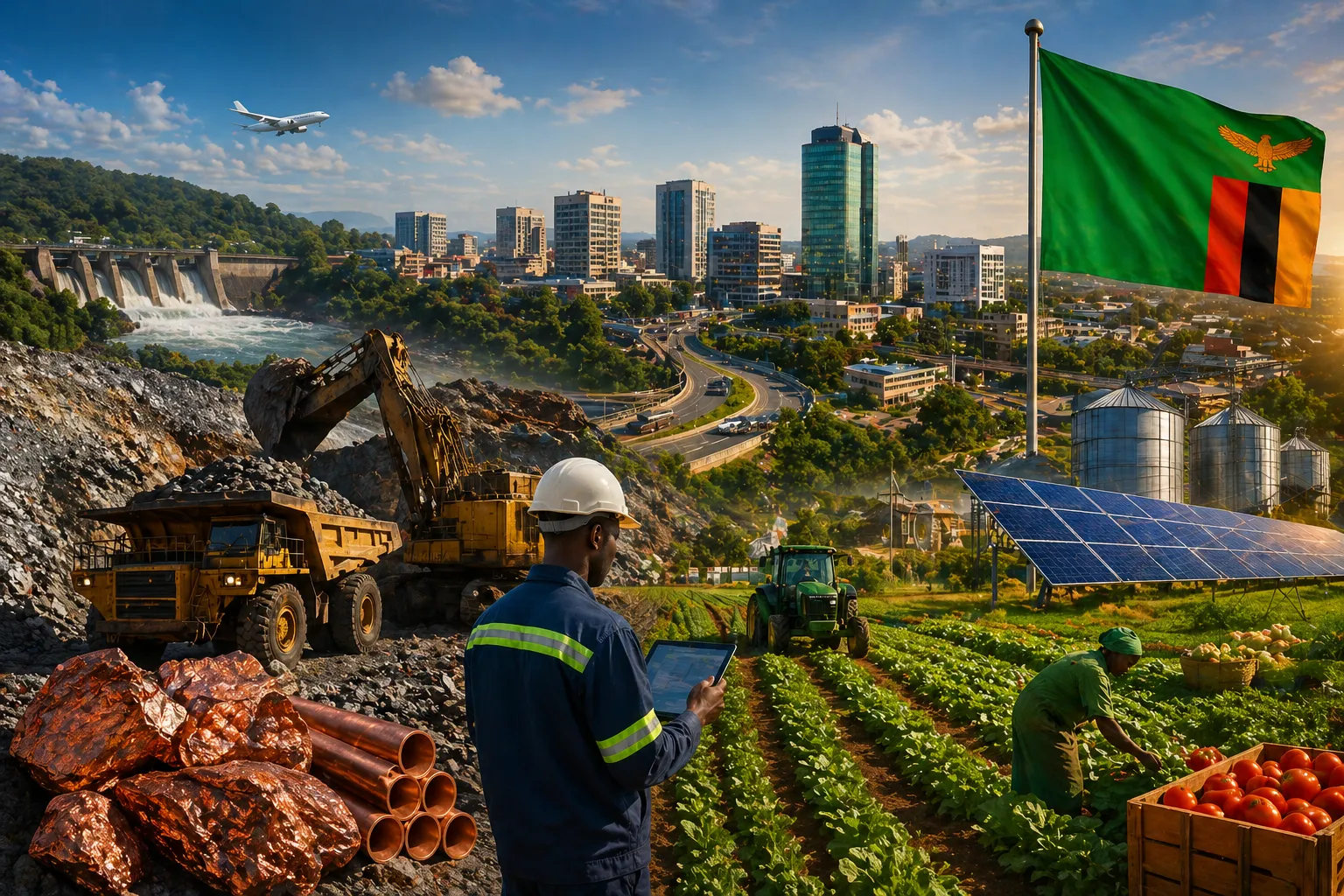
.png)

Introduction
Zambia’s investment landscape is evolving rapidly. Over the past decade, changing macroeconomic conditions, regional trade integration, infrastructure development, and shifts in investor priorities have reshaped how deals are structured, negotiated, and financed across the country.
Today’s investment environment looks very different from the one many investor entered several years ago. Businesses are adapting to tighter liquidity conditions, changing valuation expectations, currency pressures, and a stronger focus on operational resilience.
At the same time, new opportunities are emerging across sectors such as:
- energy
- agribusiness
- mining services
- logistics
- digital infrastructure
- manufacturing
As Zambia positions itself within broader African trade and industrialization trends, investors are increasingly re-evaluating how they approach acquisitions, partnerships, expansion capital, and long-term growth opportunities.
Understanding these shifts is becoming essential for businesses, investors, and advisors operating within the market.
Zambia’s Investment Environment Is Maturing
Historically, many investment discussions in Zambia focused heavily on resource-driven opportunities, particularly within mining.
While mining remains important, investor attention is broadening toward:
- value-added industries
- infrastructure-linked businesses
- export-oriented manufacturing
- technology-enabled services
The market is gradually becoming more diversified and operationally sophisticated.
Investors Are Prioritizing Cash Flow Quality
In previous years, some investors emphasized aggressive growth projections over operational fundamentals.
Today, there is greater focus on:
- predictable cash flow
- operational efficiency
- working capital discipline
- foreign currency generation
Businesses with stable revenue models and resilient operations are often attracting stronger investor interest.
Currency Volatility Is Influencing Deal Structures
Exchange rate movements continue affecting investment decisions across Zambia.
Investors are increasingly paying attention to:
- currency exposure
- foreign exchange liquidity
- pricing flexibility
- revenue currency mix
Businesses generating hard currency revenues may receive stronger valuations due to lower exchange-rate risk.
Due Diligence Expectations Are Increasing
Modern investors are conducting deeper due diligence than before.
Areas receiving greater scrutiny include:
- governance systems
- tax compliance
- environmental risks
- legal structures
- operational controls
Businesses with weak documentation or governance gaps may experience delayed or failed transactions.
Infrastructure and Regional Trade Matter More
Regional trade integration is changing how investors assess growth potential.
Zambia’s position within:
- SADC
- COMESA
- AfCFTA
creates opportunities for businesses capable of scaling regionally.
Investors increasingly value companies with:
- regional distribution potential
- logistics advantages
- export capabilities
Debt and Equity Markets Are Evolving
Capital structures within deals are also changing.
Investors are using more flexible financing approaches, including:
- blended finance
- structured debt
- mezzanine financing
- strategic equity partnerships
This creates opportunities for businesses that may not fit traditional financing models.
Operational Resilience Is a Key Investment Theme
Recent global and regional disruptions have shifted investor thinking significantly.
Businesses are now evaluated on their ability to manage:
- supply chain disruptions
- policy uncertainty
- commodity volatility
- inflation pressures
Resilience has become a major component of investment attractiveness.
ESG and Sustainability Are Becoming More Important
Environmental, social, and governance (ESG) considerations are increasingly influencing investment decisions globally.
Investors now evaluate:
- environmental impact
- sustainability practices
- workforce policies
- governance transparency
Businesses aligned with sustainability priorities may improve access to international capital pools.
Family Businesses Are Entering Transition Phases
Many Zambian businesses remain founder-led or family-controlled.
As ownership transitions emerge, opportunities are growing for:
- strategic partnerships
- succession financing
- partial exits
- institutional investment
This is reshaping the broader deal making environment.
Valuation Expectations Are Becoming More Realistic
The market is also seeing adjustments in valuation expectations.
Investors are increasingly disciplined regarding:
- earnings quality
- growth sustainability
- operational risk
- liquidity realities
Businesses with inflated valuation expectations may struggle to close transactions.
Sector Opportunities Continue Expanding
Several sectors continue attracting investor attention, including:
- renewable energy
- agribusiness
- logistics infrastructure
- fintech
- healthcare services
- industrial processing
Long-term structural demand supports continued investment interest across these industries.
Final Thoughts
Deal making in Zambia is becoming more sophisticated, selective, and operationally focused. Investors are increasingly prioritizing resilience, governance quality, regional scalability, and sustainable cash flow generation over purely speculative growth narratives.
Businesses that adapt to these evolving investment expectations may position themselves more effectively for future partnerships, acquisitions, and capital raising opportunities.
Call to Action
Companies seeking investment should strengthen governance systems, improve operational transparency, and align business models with long-term regional growth and resilience trends.