.png)
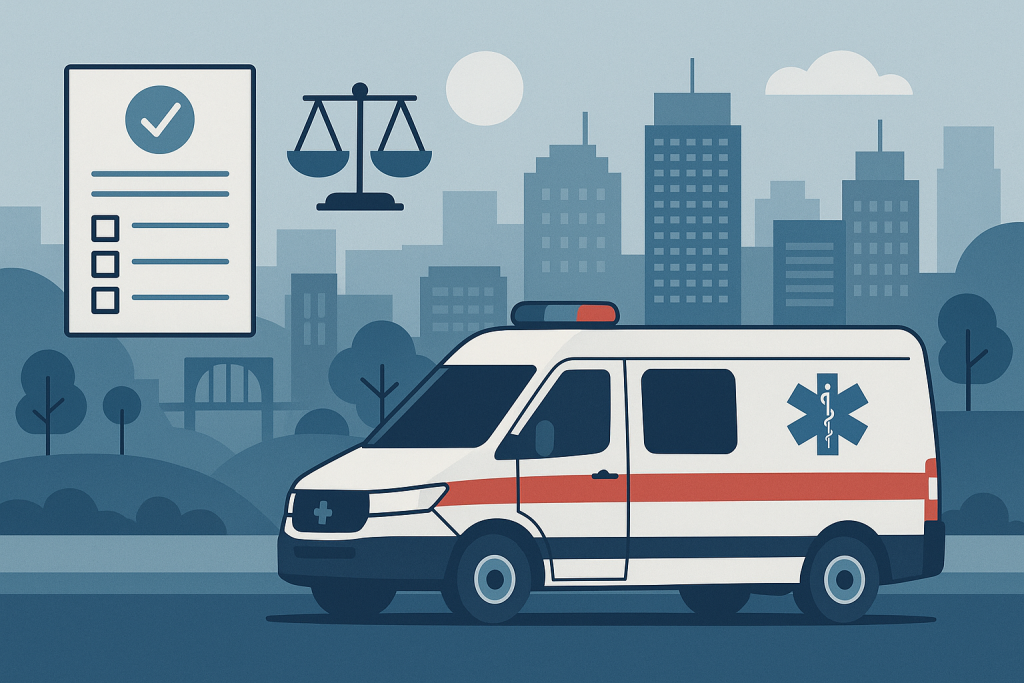
Emergency medical response can determine whether a patient lives or dies in the crucial first hour. Zambia’s public system still relies heavily on patients arranging their own transport to hospital—often in private cars or taxis. That gap creates a clear opportunity for entrepreneurs to build a private ambulance service that is both life‑saving and commercially viable.
Why Zambia Needs Private Ambulance Services
Although Lusaka and the Copperbelt host a handful of operators, most of the country remains without organised pre‑hospital care. By providing rapid response, inter‑facility transfers, and standby cover for events, a private ambulance service improves patient outcomes, reduces strain on hospitals, and earns revenue from multiple streams. Crucially, it also builds trust in the wider healthcare ecosystem.
The Regulatory & Licensing Roadmap
1. Register your health facility
The Health Professions Council of Zambia (HPCZ) licenses every medical facility in the country, including ambulance bases and mobile units. Prepare:
-
A completed “Licence to Operate a Health Facility” application
-
A detailed service‑area map
-
Proof of premises ownership or lease
-
A list of certified staff with practising licences
-
Evidence that your vehicles meet national health‑care standards
Licences renew annually, so create a compliance calendar to avoid penalties.
2. Comply with vehicle regulations
Under Section 149 of the 2022 Road Traffic Act, emergency vehicles operating with siren and flashing lights enjoy limited exemptions from speed limits. The Road Transport & Safety Agency (RTSA) will still inspect each ambulance for:
-
Roadworthiness
-
Functional warning lights and siren
-
Left‑ or right‑hand drive compliance (ambulances are exempt from Zambia’s left‑hand‑drive ban)
3. Protect patient data & drugs
Store controlled medicines in lockable compartments and adopt clear protocols for patient records in line with the National Health Care Standards. Secure supply chains up‑front to avoid shortages later.
Calculating Start‑Up & Operating Costs
| Cost Centre | Typical Items | Notes |
|---|---|---|
| Fleet & Equipment | Type II or III ambulances, stretchers, defibrillators, monitors, oxygen | Budget US $85 000–$120 000 per fully fitted vehicle |
| Base & Dispatch | Office lease, call‑taking software, two‑way radios, generator | Locate near a major hospital or highway |
| Personnel | EMTs, paramedics, drivers, dispatcher, medical director | Salaries will form the largest monthly outlay |
| Training | EMT certification, defensive driving, life‑support refreshers | Aim for continuous professional development |
| Marketing & Community Outreach | Website, hotline, corporate presentations, social media | Education builds call volume and subscription sales |
A lean two‑ambulance start‑up often requires US $500 000–US $1 million depending on import duties, vehicle specs, and facility costs.
Crafting a Sustainable Revenue Model
-
Subscription (Membership) Plans** ** Corporate and family packages guarantee immediate cover and predictable cash flow.
-
Per‑Call Billing** ** Pay‑as‑you‑go charges for non‑members—priced by distance and level of care.
-
Event Cover** ** Sports, concerts, conferences, mine sites, and construction projects pay standby fees.
-
Inter‑Facility Transfers** ** Partner with private hospitals and dialysis centres for scheduled patient moves.
-
Insurance & Assistance Contracts** ** Insurers value guaranteed service‑level agreements (SLAs) that reduce claim costs.
Building the Right Team
| Role | Minimum Requirement | Key Responsibilities |
|---|---|---|
| Emergency Medical Technician (EMT) | Certificate in Emergency Medical Care + HPCZ licence | Basic life support, patient assessment |
| Paramedic | Advanced EMT Diploma or international equivalent | Drug administration, advanced airway, ECG interpretation |
| Driver | PSV licence + ambulance driver course | Safe high‑speed transport, stretcher handling |
| Dispatcher | Call‑taking & radio training | Triage, routing, data entry |
| Medical Director | MBChB + emergency‑care experience | Clinical governance, protocol review |
To plug Zambia’s current training gap, consider launching an in‑house academy or sponsoring staff through regional colleges.
Fleet, Equipment & Supply Chains
-
Vehicle Choice** ** Diesel engines handle Zambia’s long distances and varied terrain. Install bull bars and robust suspension for rural roads.
-
Life‑Saving Kit** ** Stock each ambulance with airway equipment, trauma packs, cardiac monitors, obstetric kits, paediatric supplies, and portable ventilators.
-
Redundant Supplies** ** Maintain a 30‑day stock of drugs and consumables. Use two suppliers to avoid single‑source failures.
Communication & Dispatch Infrastructure
-
Secure a short, memorable hotline—e.g., 771—and advertise it widely.
-
Adopt GPS‑enabled computer‑aided dispatch (CAD) for route optimisation.
-
Link radios to GSM networks for areas with shaky coverage.
-
Sign memoranda of understanding (MOUs) with nearby hospitals for seamless hand‑offs.
Common Challenges—and How to Beat Them
| Challenge | Impact | Solution |
|---|---|---|
| Equipment shortages | Service downtime | Bulk‑buy kits, set re‑order alerts |
| Staff turnover | Skill drain | Offer career progression, fund ongoing education |
| Public awareness | Low call volume | Run community demos, radio spots, employer seminars |
| Road conditions | Delayed response | Fit 4×4 vans, plan alternate routes |
| Cash‑flow dips | Missed payroll | Diversify revenue with events and contracts |
Step‑by‑Step Implementation Timeline
Phase 1 – Planning (Months 0‑3)
-
Conduct market analysis and financial modelling.
-
Register the company and reserve a base location.
-
Submit HPCZ licence application and initiate fleet procurement.
Phase 2 – Build‑Out (Months 4‑9)
-
Import and kit out ambulances.
-
Install CAD, phones, and radio repeaters.
-
Recruit, train, and licence core staff.
Phase 3 – Launch (Month 10 onward)
-
Activate the hotline and go live in a limited catchment zone.
-
Roll out corporate enrolment drives.
-
Collect quality‑of‑care data for continuous improvement.
Conclusion
A well‑run private ambulance service in Zambia bridges the gap between home and hospital, saves lives, and creates a profitable, socially meaningful enterprise. By mastering regulation, investing in people, and focusing on reliable operations, you can turn a pressing public‑health need into a sustainable business that benefits communities nationwide.