.png)
A Lusaka distributor can issue 40 invoices before lunch, receive supplier stock in the afternoon, and still have no reliable answer to one board question: what did the business earn, owe, and collect this month? That gap usually begins with inconsistent records, not with a shortage of reports.
Pastel accounting gives Zambian businesses a structured way to record transactions, monitor stock and produce management reports. Our Sage Pastel Zambia advisory work starts with a practical point: the software only produces useful information when the chart of accounts, source documents and review process reflect how the enterprise actually trades.
What Pastel accounting means in practice
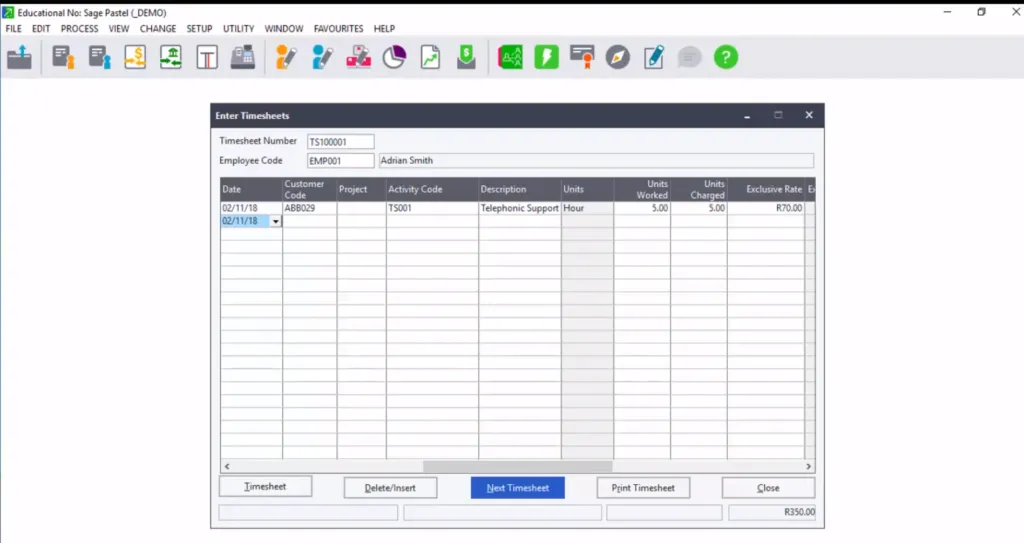
Sage 50cloud Pastel is desktop accounting software that helps businesses manage customers, suppliers, inventory and the general ledger. A properly configured system can support sales, purchases, stock control, cash-flow monitoring and management reports.
For a Zambian enterprise, that usually means recording a customer invoice when a sale occurs, matching a supplier invoice to goods received, allocating the correct tax treatment, and reconciling the bank account before management relies on the month-end figures. Pastel can also record quotations, sales orders, purchase orders, credit notes and inventory movements.
The software does not guarantee Zambian tax compliance. ZRA returns, payment dates, supporting records and Smart Invoice obligations require separate controls and qualified review.
The records behind the screen still matter
Under Zambia’s Companies Act No. 10 of 2017, companies must keep accounting records in English. Those records need to capture daily money received and spent, assets and liabilities, goods bought and sold, or services provided and the related invoices.
A Pastel entry without an invoice, receipt, goods received note or bank evidence leaves an avoidable gap. PACRA can assess fines of up to 20,000 penalty units for failures relating to accounting-record requirements, while keeping records anywhere other than the registered office can expose directors to fines of up to 100,000 penalty units. These are governance obligations under the Act, not software settings.
Step 1: Decide whether Pastel fits your operation
Pastel suits businesses that need more control than a spreadsheet can provide, especially where several people raise invoices, buy stock, approve payments or review margins. A wholesale importer, construction supplier, professional-services firm or growing retailer can use its customer, supplier and inventory records to see where cash and profit diverge.
If a founder has a very small volume of transactions and does not maintain stock, do not buy a broad accounting package merely because it looks more professional. First establish the records, approval steps and reporting questions the business needs. Software should follow the operating model.
Take an illustrative retailer with 12 staff, a US$40,000 monthly payroll and inventory across two outlets. If the team posts sales only at month-end and leaves supplier invoices on a manager’s desk, the owner cannot identify a stock shortage or overdue debtor until after the cash has gone. A configured Pastel process can record each invoice, goods received note and inventory movement as they occur. The retailer would still need daily till evidence, stock counts and bank reconciliations. We would advise the owner to fix those source-document routines before expecting the management report to guide buying decisions.
Step 2: Build a Zambian chart of accounts before entering transactions
The chart of accounts is the map that tells Pastel where each transaction belongs. It should separate sales types, cost of sales, operating expenses, receivables, payables, bank accounts, inventory, VAT control accounts, PAYE and NAPSA liabilities.
Do not use a generic chart without reviewing it against the business model. A transport operator needs to distinguish fuel, repairs and route income. A consultancy needs a clear view of retainer fees, project fees, subcontractors and unbilled work. Management cannot assess a margin that the ledger combines into one broad expense line.
Set up customer and supplier master records with consistent naming, credit terms and tax treatment. The common error is allowing staff to create duplicate suppliers because one invoice says “ABC Ltd” and another says “A.B.C.”. Duplicate accounts conceal the real creditor balance and make payment approvals weaker.
Configure tax codes with professional review
ZRA states that the standard VAT rate is 16% for standard-rated supplies. Configure the relevant tax treatment before routine invoicing begins, because correcting a large batch of invoices after a VAT period closes creates work and raises the risk of inconsistent records.
For electronic VAT submissions, payment falls due by the 18th of the following month, according to ZRA’s current guidance as of September 2026. The accounting team should reconcile the VAT control account to the filed return and payment confirmation before closing the period. A ledger balance alone does not prove that the return is complete.
Businesses with annual sales of K5,000,000 or less fall under Turnover Tax in ZRA’s current 2026 guidance. Returns and payments are due by the 14th of the following month. If your business falls within that threshold, do not configure its routine reporting as though it were a VAT-registered business without confirming the applicable tax position. The correct treatment depends on the enterprise’s registration and supplies, so a qualified tax review should precede filing.
Step 3: Turn every transaction into an evidence trail
A sound Pastel workflow begins before a user posts anything. A sales invoice needs the underlying order or service confirmation. A supplier invoice needs approval and, where goods arrive, a goods received note. A credit note needs a reason and authorisation.
At the counter, an officer reviewing records will not treat a polished management report as a substitute for supporting documents. The report tells the story. The invoice, receipt, bank statement, stock record and approval show why the story is credible.
Take an illustrative engineering supplier that buys imported spares and sells them to contractors. A K250,000 supplier invoice entered directly to purchases may overstate current expenses if the goods remain in stock at month-end. The business should record the goods received, classify the inventory correctly and count selected items against the system. If it skips that step, a healthy gross-margin report can hide K60,000 of unrecorded or misclassified stock movement. The finance lead would do better to assign one person to receive goods and another to approve supplier payments.
Reconcile, do not merely post
Complete bank reconciliations every month, and investigate unmatched deposits, uncleared payments and bank charges. Reconcile customer balances to statements and supplier balances to their invoices. For stock businesses, compare selected physical counts with Pastel inventory records.
This discipline matters because an unreconciled ledger can contain old errors that become accepted as fact. We often see tax liabilities posted each month without anyone matching the account to the return filed with ZRA or the receipt confirming payment.
Step 4: Treat payroll liabilities as deadlines, not journal entries
Pastel can help the finance team post payroll-related liabilities, but payroll compliance requires its own monthly controls. Employers must remit PAYE using the Monthly PAYE Return ITF/P16 by the 10th of the following month, under ZRA’s current payment-due guidance.
NAPSA formal-sector contributions total 10% of gross earnings, split equally between employee and employer contributions of 5% each. The NAPSA portal displayed a monthly ceiling of K28,920.30 and a maximum contribution of K2,892.03 when accessed on 30 September 2026. Contributions and monthly schedules fall due by the 10th of the following month.
Confirm the applicable NAPSA ceiling before each payroll cycle. NAPSA’s portal does not state the effective year for the displayed ceiling, so finance teams should not carry forward an old payroll setting without checking the current notice. Run the numbers through a PAYE calculator as a check, then match the Pastel liability balances to the submitted PAYE return, NAPSA schedule and payment evidence.
Step 5: Confirm Smart Invoice before assuming compatibility
Businesses using accounting packages or ERP systems need a Certified Invoicing System integrated with ZRA Smart Invoice through the Virtual Sales Data Controller. Pastel can create customer invoices, but a standard invoice produced by an accounting package does not automatically meet Smart Invoice requirements.
Confirm the specific Pastel integration, supplier implementation and certification status before describing the system as compatible. This step matters because ZRA’s requirement concerns the certified invoicing system and its integration, not the name of the accounting package on its own.
Do not wait until an invoice deadline to test this. Ask who will issue the invoice, what data must transfer, how credit notes will work, and who will investigate a failed transmission. Those questions turn a technical installation into a controlled business process.
Step 6: Use monthly reports for management and statutory governance
At month-end, management should review a profit and loss statement, balance sheet, cash-flow position, aged receivables, aged payables and, where relevant, inventory valuation. The purpose is not to produce more reports. It is to make timely decisions about collections, purchasing, pricing and cash commitments.
PACRA annual returns remain a separate obligation from ZRA income-tax returns. Companies must lodge annual returns within 90 days after the financial year-end. Public companies must include audited financial statements and updated beneficial-ownership information under the Companies Act 2017.
For investors assessing Zambia, disciplined monthly records also support due diligence. ZDA publicised priority-sector investment incentive thresholds on 26 March 2026, including US$50,000 for 100% locally owned investments and US$1 million for foreign investors. Eligibility depends on the statutory conditions, so do not treat an accounting report as proof that an investment qualifies. Use the report as evidence for a properly reviewed application and governance file.
A practical monthly Pastel accounting checklist
1. Enter sales, purchases, receipts, payments and inventory movements from approved source documents. This keeps the ledger tied to evidence.
2. Review VAT coding before filing. A corrected tax code after submission can create a mismatch between invoices, the ledger and the ZRA return.
3. Reconcile bank accounts, debtors, creditors and stock records. Reconciliations identify errors while staff can still explain the transaction.
4. Match PAYE and NAPSA control accounts to filed returns, schedules and payment confirmations. Due dates do not move because the ledger has not been updated.
5. Review management reports with the business owner or finance lead. A report should lead to a decision, such as following up a debtor or limiting a stock purchase.
6. Archive invoices, receipts, approvals and reconciliation support in an accessible record system. Pastel records form part of the evidence, but they do not replace the underlying documents.
Frequently Asked Questions
Is Pastel accounting suitable for a small Zambian business?
It can be suitable where the business needs customer, supplier, inventory or general-ledger control. A smaller enterprise with low transaction volumes should first define its record-keeping and reporting needs, then select a setup that staff can operate consistently.
Does Pastel automatically make a business compliant with ZRA?
No. Pastel can support the underlying records, invoices and reports, but compliance depends on correct tax configuration, complete source documents, timely returns and payments. Businesses also need to confirm Smart Invoice certification and integration requirements with ZRA.
What is the VAT rate and payment deadline in Zambia?
ZRA’s current guidance lists the standard VAT rate as 16%. For electronic submissions, VAT payment is due by the 18th of the following month, as of September 2026. A qualified M&J team member should review statutory settings before publication or filing because tax treatment can depend on the supply.
When are PACRA annual returns due?
Companies must lodge PACRA annual returns within 90 days after their financial year-end. This filing is different from a ZRA tax return, so assign ownership of each deadline separately.
A Pastel implementation earns trust when it reflects the way your business buys, sells, pays and governs itself. Visit the Sage Pastel Zambia hub page to speak with our team about a setup that supports management insight and Zambian compliance.