.png)
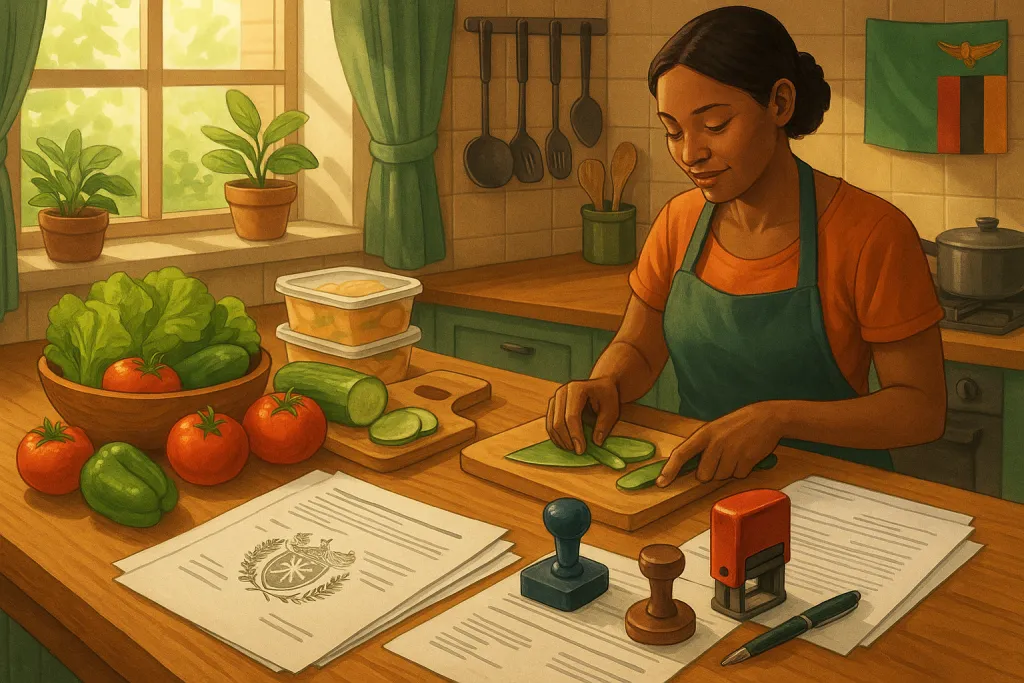
Launching a home‑based food business in Zambia is an exciting way to turn your culinary talent into income. Yet, to stay on the right side of the law—and gain customer trust—you must secure several permits and comply with health and tax rules. This guide breaks down every approval you need, why it matters, and how to get it.
1. Register Your Business and Meet Tax Obligations
1.1 Business Registration with PACRA
Before selling a single meal, register with the Patents and Companies Registration Agency (PACRA). The process is straightforward:
-
Name clearance – confirm that your business name is unique.
-
Online or in‑person filing – upload or submit the forms, directors’ NRC copies, and Articles of Association.
-
Certificate of Incorporation – once issued, this proves your enterprise is a legal entity.
PACRA’s e‑portal lets you track your application in real time, cutting trips to Lusaka offices.
1.2 Tax Registration with ZRA
Next, visit the Zambia Revenue Authority (or use the ZRA TaxOnApp) to obtain:
-
Taxpayer Identification Number (TPIN) – required for all invoices and official receipts.
-
Tax Clearance Certificate – often requested by suppliers and lenders.
Register early; you cannot renew local permits without an active TPIN.
2. Secure Food‑Safety and Health Approvals
2.1 Municipal Health Permit
Every food business—home‑based or commercial—needs a Health Permit from the local council (e.g., Lusaka City Council). Inspectors will check:
-
Kitchen layout, ventilation, and drainage.
-
Availability of potable water and legally managed solid waste.
-
Adequate lighting and pest‑proof storage.
The permit costs about K20 for the application plus an annual licence fee. Display it where customers can see it.
2.2 Certificate of Compliance (Food Safety Act No. 7 of 2019)
After the health inspection, officers issue a one‑year Certificate of Compliance confirming you meet structural, sanitary, and hazard‑control standards. Keep it framed near your cooking area; surprise audits are common.
2.3 Food Handlers Certificates
Anyone—owner, family member, or employee—who touches food must hold a Food Handlers Certificate. Applicants undergo basic medical checks and a food‑hygiene class at an approved clinic. Renew every 12 months.
3. Obtain Local Authority Permits
| Permit | Why You Need It | Issuing Body | Renewal |
|---|---|---|---|
| Business Levy Certificate | Categorises your venture and sets council fees | Local council | Annually |
| Fire Certificate | Verifies your kitchen meets fire‑safety codes (extinguishers, exits) | Local fire department | Annually |
| Occupational Certificate | Confirms that home premises suit business activity and zoning rules | Local council | When major renovations occur |
Tip: Many councils bundle inspections—schedule health, fire, and occupational checks on the same day to reduce downtime.
4. Consider Environmental and Insurance Requirements
4.1 Environmental Permit (ZEMA)
If you generate significant organic waste or smoke (e.g., large‑scale baking, smoking meat), the Zambia Environmental Management Agency may require an environmental impact screening. Most micro‑kitchens are exempt, but always confirm—penalties can reach K90,000.
4.2 Public Liability Insurance
Accidents happen. A Public Liability policy shields you if a customer falls sick or is injured after visiting your premises. Premiums are modest and often bundled with property cover.
5. Prepare Your Home Kitchen for Inspection
Follow these practical steps to sail through inspections the first time:
-
Upgrade finishes – washable, light‑coloured walls and non‑slip flooring make cleaning—and inspections—easier.
-
Segregate activities – dedicate one sink to dish‑washing and another to handwashing.
-
Label everything – use date‑coded stickers for stored ingredients and finished dishes.
-
Keep records – maintain a cleaning schedule and temperature logs for fridges/freezers.
-
Join a legal waste‑collection service – councils require proof of subscription before issuing permits.
Proactively meeting these standards not only speeds approvals but also reassures customers of your professionalism.
6. Application Timeline at a Glance
-
Week 1 – Name search and PACRA filing.
-
Week 2 – ZRA TPIN registration.
-
Week 3 – Kitchen upgrades and staff medicals.
-
Week 4 – Municipal inspections (health, fire, occupation).
-
Week 5 – Collect permits, print compliance certificates, open for business!
With organised paperwork, you can launch in as little as five weeks.
Conclusion
Operating a home‑based food business in Zambia is perfectly achievable when you tick each regulatory box: register with PACRA, secure your TPIN, pass municipal health checks, and keep insurance current. These obligations might feel burdensome at first, but they protect public health, your reputation, and your bottom line. Invest the time now, and you’ll build a trustworthy brand that customers—and regulators—respect.