New

2026 ZRA Tax Season: Filing deadline approaching — ensure your returns are submitted on time. Get tax compliance support →

M&J Consultants
  • Business Advisory

    Advisory Services

    • Business Consulting
    • Accounting & Bookkeeping
    • HR Consulting
    • Company Formation
    • Register from South Africa
    • Register from UK
    • Register from China
    • Investor Services

    Tax & Compliance

    • Tax Services
    • Tax Technology Consulting
    • Tax Legislation Advisory
    • All Tax Services
    Need Expert Advice?

    Free initial consultation with our team.

    +260 950 054 386 +260 979 369 374 [email protected]
    Schedule a Meeting →
  • Digital Transformation

    Enterprise Resource Planning

    • Odoo ERP System
    • Odoo for Manufacturing
    • Odoo for Retail
    • Odoo for NGOs
    • Odoo for Construction
    • Palladium ERP

    Business Systems

    • Sage Pastel Accounting
    • QuickBooks
    • Zoho Books
    • IQ Retail
    • Software for Mining
    • Software for Retail

    Payroll Software

    • Sage Pastel Payroll
    • Odoo Payroll
  • Tools

    Tax Calculators

    • PAYE Calculator 2026
    • VAT Calculator
    • NAPSA & NHIMA Calculator
    • DTA Navigator 2026

    Compliance Tools

    • Compliance Calendar 2026
    • Smart Invoice Checker
    • WHT Rate Finder
    • Turnover Tax Decision Tool
    • Import Duty Estimator
    Tools

    All calculations run in your browser. We never store your data.

    View All Tools →
  • Guides

    ZRA & Tax Compliance

    • PAYE Rates & Tax Bands 2026
    • VAT Registration Guide
    • Turnover Tax vs Income Tax
    • Smart Invoice Compliance
    • TPIN Registration
    • Tax Clearance Certificate
    • NAPSA & NHIMA Guide

    Company Formation

    • Register a Company (PACRA)
    • Registration for Foreigners
    • Registration Costs 2026

    HR & Employment

    • Payroll Setup Guide

    ERP & Software

    • Odoo Smart Invoice Setup
    • Best Accounting Software 2026

    More Resources

    • Insights & Articles
    • FAQ
    Expert Guides

    Comprehensive, Zambia-specific guides with real rates, deadlines, and step-by-step processes. Updated for 2026.

    Browse All Guides →
  • About Us
  • Contact Us
Get Started
Home / Insights / Zambia as a Regional Hub: Gateway or Missed Opport...
Business Setup 27 April 2026 5 min read

Zambia as a Regional Hub: Gateway or Missed Opportunity?

M&J Consultants M&J Consultants
Zambia as a Regional Hub: Gateway or Missed Opportunity?

Introduction: Geography Is Not Strategy

On the map, Zambia looks like a natural regional hub.

Land-linked, centrally positioned, and bordering multiple economies, it sits at the crossroads of Southern and Central African trade routes.

But geography alone does not create a hub. Execution does.

The question is no longer whether Zambia can be a gateway, it is whether it is becoming one.

1. The Location Advantage

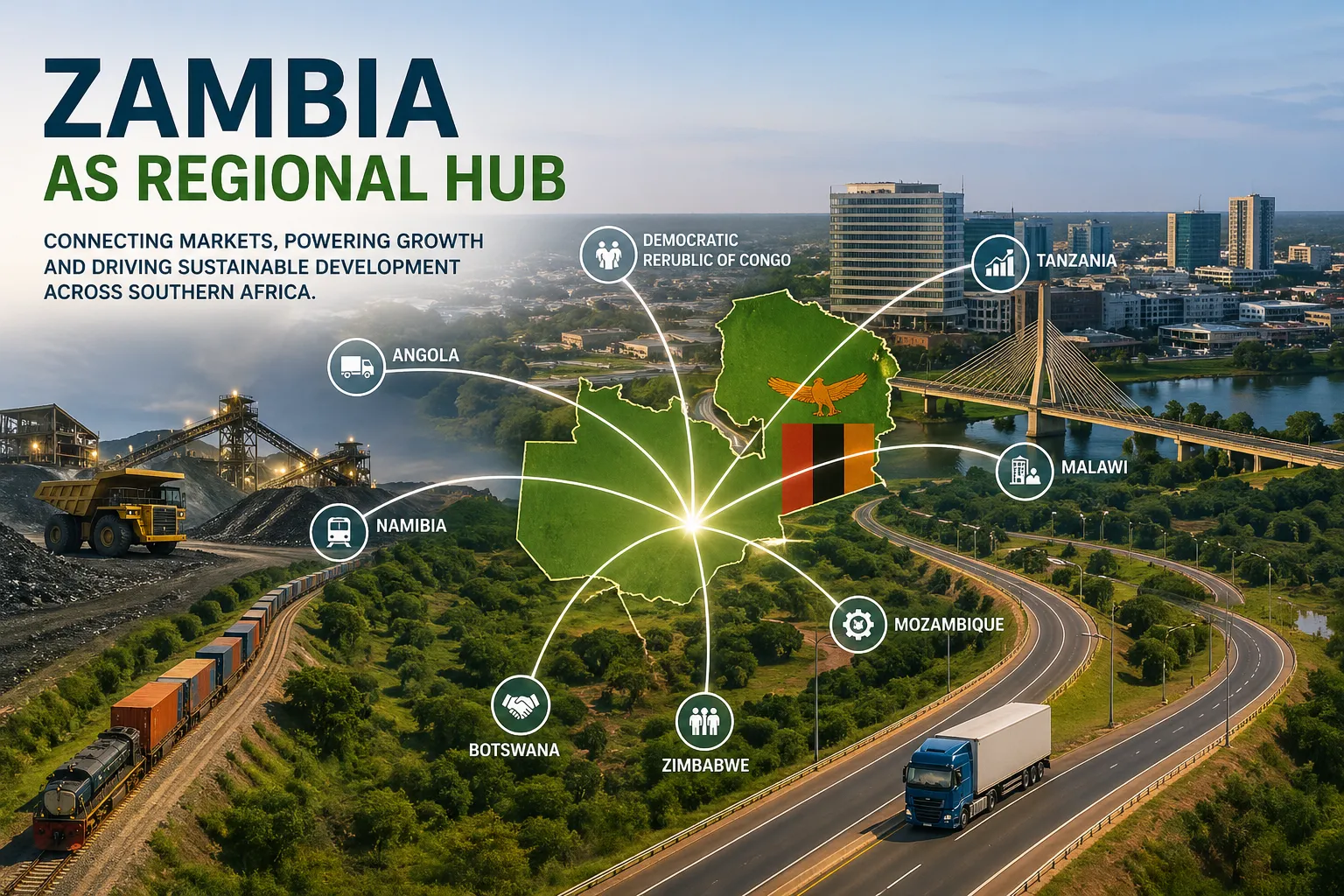
Zambia borders eight countries, placing it in direct proximity to key markets including:

  • Democratic Republic of the Congo (minerals and industrial demand)
  • Tanzania (access to the port of Dar es Salaam)
  • Zimbabwe and Botswana (regional trade flows)

This positioning creates the potential for Zambia to serve as a transit, processing, and distribution hub.

Few countries in the region have this level of geographic connectivity.

2. Trade Corridors: The Foundation of a Hub

Several major transport corridors pass through or connect to Zambia:

  • The North-South Corridor, linking southern ports to inland markets
  • The Dar es Salaam Corridor, providing access to East African trade routes
  • Rail and road networks connecting mining regions to export points

These corridors are critical. A hub is not defined by borders, it is defined by movement.

Zambia already sits on these routes. The question is how effectively it leverages them.

3. Logistics: The Missing Layer of Value

Being on a corridor is not the same as capturing value from it.

To function as a true hub, Zambia must expand:

  • Warehousing and storage infrastructure
  • Cold-chain logistics
  • Freight consolidation and distribution services
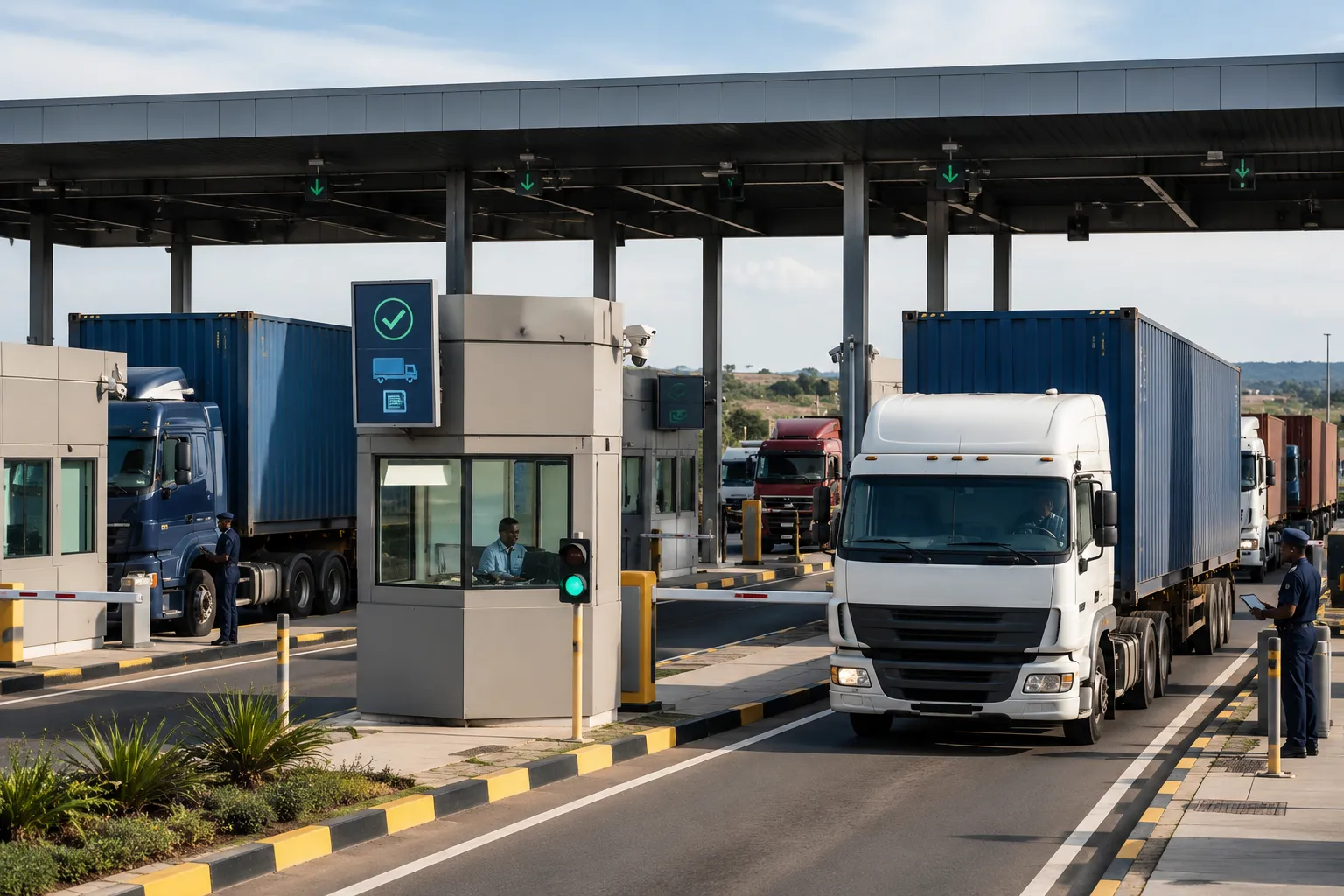
  • Customs efficiency and border processing

Without these, goods pass through, but value does not stay.

The opportunity is not just to move goods, but to handle, process, and add value to them.

4. Energy: The Critical Constraint

No regional hub can function without reliable power.

Energy challenges in Zambia affect:

  • Industrial processing
  • Logistics operations
  • Investment confidence

Until energy reliability improves, Zambia’s ability to operate as a high-functioning hub remains constrained.

At the same time, this gap creates a parallel opportunity for energy investment and private power solutions.

5. The Policy Factor: Direction Matters

Zambia has taken steps toward improving its investment environment, including:

  • Engagement with international partners following debt restructuring
  • Policy signals supporting value addition
  • Efforts to attract foreign direct investment

However, becoming a regional hub requires:

  • Consistency in policy implementation
  • Efficient regulatory processes
  • Strong coordination across sectors

A hub is not built by policy intent alone, it requires execution at scale.

6. Competition from Regional Peers

Zambia is not the only country aiming to position itself as a hub.

  • South Africa offers advanced infrastructure and deep logistics networks
  • Kenya serves as a gateway to East Africa
  • Tanzania is strengthening its port and corridor infrastructure

This creates competitive pressure.

Zambia’s advantage is location, but competitors may outperform on infrastructure and efficiency.

7. The Private Sector Opportunity

The gap between potential and execution is where opportunity lies.

Private sector players can participate in:

  • Logistics and warehousing development
  • Transport and fleet operations
  • Industrial park and free zone development
  • Cross-border trade services

These are not peripheral activities, they are central to building a functional hub.

8. Gateway or Missed Opportunity?

Zambia is at a decision point.

It has:

  • Strategic geography
  • Access to key trade corridors
  • Growing relevance in regional supply chains

But it still needs:

  • Infrastructure depth
  • Energy reliability
  • Operational efficiency

If these gaps are addressed, Zambia becomes a gateway economy. If not, it risks remaining a transit point where value passes through but is not captured.

Conclusion: Potential Is Not Enough

Zambia’s position in the region is undeniable.

But in global trade, potential is not rewarded, execution is.

The difference between a gateway and a missed opportunity will be determined by:

  • Investment in infrastructure
  • Strength of logistics systems
  • Consistency in policy and operations

Zambia has the foundation. The outcome depends on how it builds on it.

Call to Action

Zambia’s evolution into a regional hub presents opportunities across logistics, infrastructure, and trade services.

Businesses and investors should assess where they can participate in building the systems that move and manage goods across the region.

Engage early, invest strategically, and position within Zambia’s emerging role in regional trade.

Build the networks. Capture the flow. Turn location into value.

Share This Article

Need Expert Advice?

Tell us what you need - a consultant will get back to you within 24 hours.

Get Zambia Business Insights in Your Inbox

Join business owners and investors who receive our weekly tax tips, compliance updates, and growth strategies. No spam - just actionable advice.

Unsubscribe anytime. We respect your privacy.

Related Articles

Zambia IMF Program: How Businesses Can Strategically Align with Reform Under the IMF Successor Framework
Business Setup 5 min read

Zambia IMF Program: How Businesses Can Strategically Align with Reform Under the IMF Successor Framework

Zambia’s IMF program is reshaping the business landscape. Learn how companies can align with reforms...

Joint Ventures with Zambian Nationals: Your Gateway to Regional Trade
Business Setup 5 min read

Joint Ventures with Zambian Nationals: Your Gateway to Regional Trade

Partnering with Zambian nationals through joint ventures can unlock market access, regulatory alignm...

Luxury Tourism & Hospitality Investment: Meeting Zambia’s 3 Million Arrivals Target
Business Setup 5 min read

Luxury Tourism & Hospitality Investment: Meeting Zambia’s 3 Million Arrivals Target

Zambia is targeting up to 3 million tourist arrivals by 2026–2027. This article explores how luxury ...

M&J Consultants

Building Timeless Businesses. Zambia's premier business consultancy firm offering expert advisory, tax, accounting, and enterprise solutions from our Lusaka office.

Services

  • Business Advisory
  • Accounting & Bookkeeping
  • Tax Consultancy
  • HR Consulting
  • Enterprise Solutions
  • Company Formation

Tools

  • Compliance Calendar 2026
  • PAYE Calculator 2026
  • VAT Calculator
  • NAPSA & NHIMA Calculator
  • Smart Invoice Checker
  • WHT Rate Finder
  • Turnover Tax Tool
  • Import Duty Estimator

Guides

  • PAYE Tax Guide 2026
  • VAT Guide Zambia
  • Turnover Tax Guide
  • Smart Invoice Guide
  • Company Registration
  • Payroll Setup Guide
  • Insights & Articles

Company

  • About Us
  • Contact Us
  • FAQ
  • DTA Navigator
  • Investor Services

Contact Info

  • 1504 Mungulube Road, Northmead, Lusaka, Zambia
  • [email protected]
  • [email protected]
  • +260 950 054 386
  • +260 979 369 374

© 2026 M&J Consultants. All rights reserved. | Lusaka, Zambia