.png)
Introduction
On 1 January 2026, Zambia formally implemented a new era of resource governance. Statutory Instrument No. 68 of 2025 – the Geological and Minerals Development (Preference for Zambian Goods and Services) Regulations – came into force, mandating progressive local procurement quotas across the mining sector.
For multinational operators and local suppliers alike, the message was clear: local content is no longer voluntary. It is legally enforceable, digitally monitored, and backed by significant penalties.
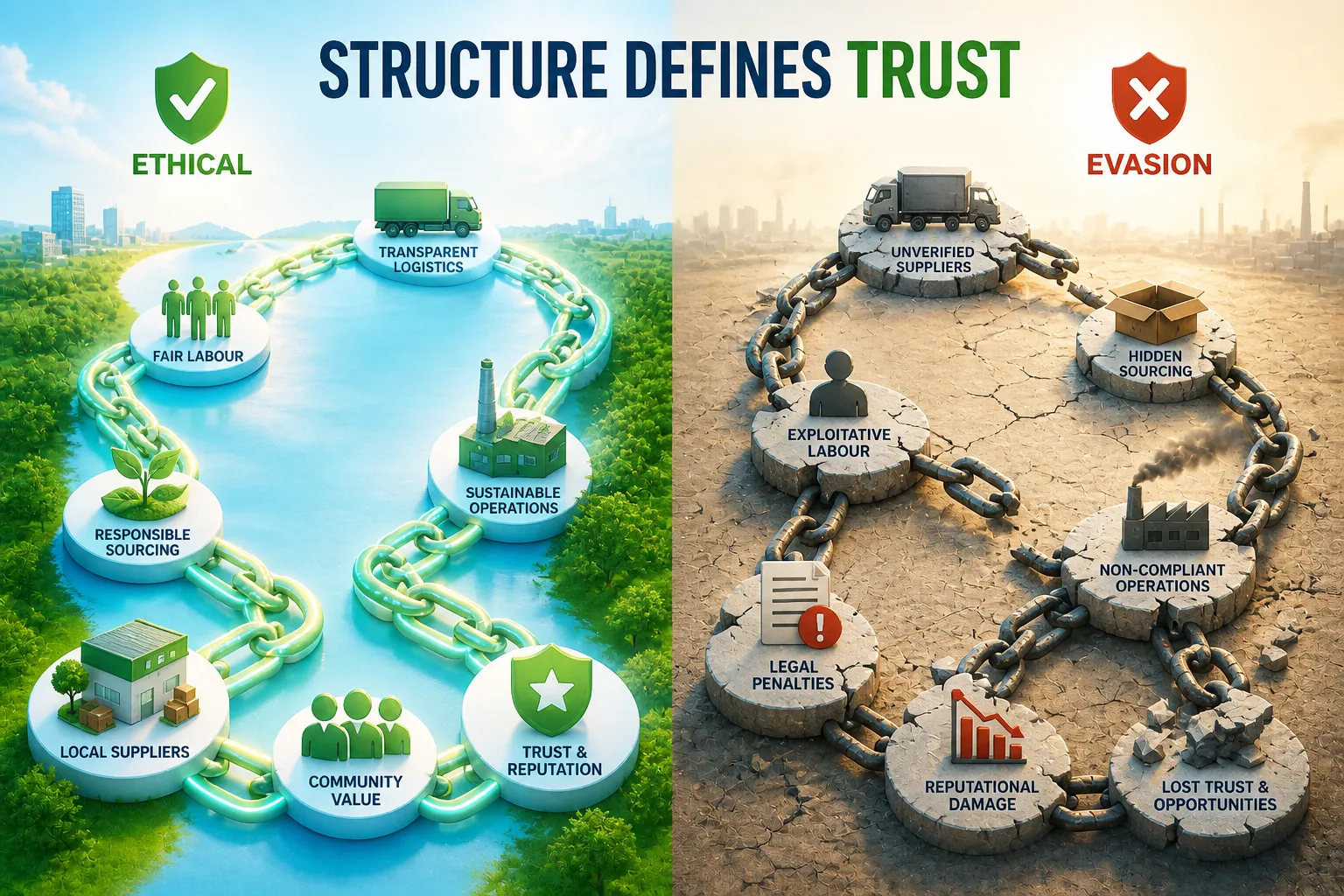
Yet, wherever mandatory quotas appear, evasion follows. The temptation to re-route procurement through shell companies, misclassify imported goods as “locally sourced,” or simply under-report foreign spend is real. But so are the consequences, from ZMW 400,000 fines to reputational collapse and blocked market access.
This article examines Zambia’s local content framework, exposes common evasion tactics, and provides a practical roadmap for building a genuinely ethical and compliant supply chain.
Zambia’s Legal Framework: What You Must Know
Zambia’s local content regime is built on three pillars: procurement quotas, margin preferences, and exclusive reservations.
The core requirements under SI 68 of 2025:
- Progressive procurement quotas: Every mining and mining-related company must allocate at least 20% of its annual procurement budget to local companies providing core mining goods or services by 30 June 2026. This rises to 25% within one year, 35% within two years, and at least 40% within five years.
- 15% margin of preference: When evaluating bids for core mining goods or services offered by local suppliers, a 15% price preference must be applied.
- Exclusive reservation for non-core services: Procurement of non-core mining goods and services – including catering, security, haulage, and other ancillary services – is 100% reserved for Zambian-owned or citizen-empowered companies.
- Supplier development obligations: Each mining company must implement a Supplier Development Programme covering training, mentorship, access to finance, and technology transfer, with a minimum of 0.05% of annual procurement expenditure allocated to these initiatives.
Definition of a “local company”:
The Regulations adopt the classifications under the Citizens Economic Empowerment Act No. 9 of 2006:
- Citizen-empowered company: Zambian citizens own between 25% and 50% of the equity and are involved in management.
- Citizen-owned company: Zambian citizens own more than 50% of the equity and have significant control over management.
Both categories qualify for preference, though policy anticipates stronger incentives for citizen-owned and locally manufacturing entities over time.
The Enforcement Machine: How Zambia Is Tracking Compliance
Zambia has moved beyond paper-based reporting. The government has deployed digital tools to monitor, audit, and penalize non-compliance in real time.
The enforcement infrastructure:
- Local Content Access System (LOCAS): An electronic portal where all mining and mining-related companies must submit Annual Procurement Plans and Quarterly Reports, including tender declarations, tender disclosures, and any applicable exceptions.
- Smart Zambia digital monitoring platform: The Smart Zambia Institute has developed a system that automatically applies penalties when a mining company exceeds limits on foreign procurement or fails to meet required thresholds. The platform monitors real-time data on business awarded to local suppliers and service providers.
- Reporting deadlines: The first quarterly submissions were due by 15 April 2026, covering the period from January to March.
Failure to submit on time triggers automatic penalties under the statutory instrument – with no manual review or appeal baked into the initial process.
The Hidden Costs of Local Content Evasion
The consequences of non-compliance extend far beyond the fine.
Legal penalties:
A company that fails to comply with the Regulations commits an offence and, upon conviction, is liable to:
- A fine not exceeding ZMW 400,000 (approximately USD 17,690)
- An additional ZMW 20,000 per day (approximately USD 885) for each day the offence continues.
If the contravention is committed with the knowledge or consent of a director, manager, shareholder, or partner, that individual may also be held personally liable for the offence.
Reputational damage:
The Smart Zambia platform digitizes procurement transparency. When a company repeatedly triggers automated penalties, the data becomes part of the public record. Investors, partners, and regulators can see a pattern of avoidance – permanently.
Operational disruption:
Non-compliant companies risk exclusion from future tenders. In a sector where long-term contracts are the foundation of operational planning, losing preferred supplier status can be catastrophic.
Anti-corruption risk:
Local content evasion often requires the creation of shell companies, front entities, or false records. Each of these activities is a direct violation of Zambia’s anti-corruption and anti-fraud legislation. Transparency International has documented that local content requirements create significant corruption risks, as politicians and officials can abuse their power to benefit their associates and family members. Shell companies used to bypass local content rules also create value leakage and rent-seeking activities within supply chains.
Common Forms of Local Content Evasion (And Why They Fail)
Savvy operators have attempted various workarounds since the Regulations took effect. Most are now detectable, and costly.
- Misclassification of goods: Imported products declared as “locally manufactured” through forged documentation.
- Shell companies: Local entities with no real operational capacity, formed solely to receive procurement allocations and pass them through to foreign suppliers.
- Under‑reporting: Reporting only a portion of foreign procurement while omitting certain purchase orders or service agreements.
- Subcontracting evasion: A local prime contractor receives a reservation, then subcontracts 100% of the work to a foreign operator without value addition.
- Beneficial ownership concealment: Structuring a company to appear Zambian‑owned while real control rests with foreign shareholders. The Regulations explicitly require disclosure of beneficial ownership details in quarterly reports to the Ministry.
Why these tactics no longer work:
- LOCAS cross-references procurement disclosures with customs data, supplier registrations, and beneficial ownership declarations.
- The Smart Zambia platform automatically flags anomalies between reported local spend and actual procurement patterns.
- Authorized officers have been empowered to conduct on-site inspections to verify compliance.
The Ethical Path: Building a Compliant, Resilient Supply Chain
Compliance is not merely about avoiding penalties. It is about building durable commercial relationships that outlast any regulatory cycle.
What an ethical, compliant supply chain looks like in Zambia today:
1. Verify Beneficial Ownership Before Engaging Any New Supplier
- Use the classifications under the Citizens Economic Empowerment Act to determine whether a potential supplier qualifies as citizen‑empowered or citizen‑owned.
- Request and retain documentation of equity ownership and management control.
2. Segregate Core and Non-Core Procurement
- Non-core services (catering, security, haulage, other ancillary services) must be sourced exclusively from local companies. No exceptions.
- Core mining goods and services must meet the progressive procurement quotas: 20% by June 2026, rising to 40% within five years.
3. Implement a Supplier Development Programme – Not Just a Compliance Document
- Allocate at least 0.05% of annual procurement expenditure to training, mentorship, technology transfer, or access to finance for local suppliers.
- Focus on building genuine local capacity – not just checking a box for quarterly reporting.
Major operators are already demonstrating leadership. Before SI 68 was even implemented, Zambia’s largest mines were already working with local suppliers, nurturing new ones, and developing the skills and infrastructure needed to build a genuine local supply base.
Handvik Investment Limited, a Zambian‑owned company, began as a single‑employee operation in 2009. By 2011 it had registered as a supplier to FQM‑run Kansanshi Mining Plc, delivering reliable services that built trust. Today, it employs more than 300 people. No statutory instrument forced Kansanshi to hire them, they won the contract by being competitive.
4. Maintain Meticulous Records, And File on Time
- Keep detailed records of all local supplier transactions to facilitate compliance monitoring.
- Submit Annual Procurement Plans and Quarterly Reports via LOCAS by the mandatory deadlines (Q1 filings due 15 April).
- Include all required attachments: procurement disclosures, beneficial ownership information, employee statistics, and updates on Supplier Development Programmes.
5. Build Internal Audit and Compliance Capacity
- Appoint a named compliance officer responsible for local content reporting.
- Conduct internal audits before each quarterly filing to correct errors before they reach the regulator.
- Train procurement teams on the definitions, classifications, and documentation requirements under SI 68.
The Bottom Line: Compliance Creates Competitive Advantage
Zambia’s local content regulations are not a temporary policy. They are the foundation of a long-term industrialization strategy, reinforced by digital monitoring tools and supported by a coordinated legal framework that includes the Geological and Minerals Development Act 2025 and the Citizens Economic Empowerment Act.
The companies that will thrive under this regime are not those that find clever ways to evade quotas. They are those that:
- Invest in genuine local supplier relationships.
- Build transparent, auditable procurement systems.
- Develop local capacity through Supplier Development Programmes.
- File complete and accurate reports on time, every time.
Evasion is expensive. Compliance is an investment.
Conclusion
The window for informal workarounds has closed. Authorized officers conduct on-site inspections. Digital systems apply penalties automatically. Beneficial ownership disclosures make front companies visible.
For mining companies, mining-related businesses, and their suppliers, the path forward is clear: build an ethical, transparent supply chain that complies fully with SI 68 of 2025. The legal penalties for failure are steep. The reputational damage for evasion is permanent. And the commercial opportunity for compliance is significant.
Zambia is rewarding prepared, ethical supply chains. Make sure yours is one of them.
Call to Action
Before your next quarterly filing to LOCAS, complete a local content audit covering five critical areas:
- Supplier classification: Have you verified the beneficial ownership and CEEA classification of every local supplier on your roster?
- Spend segmentation: Can you definitively separate core vs. non-core procurement spend?
- Quota tracking: Are you on schedule to meet the 20% procurement threshold by 30 June 2026?
- Supplier development: Have you allocated the mandatory 0.05% of procurement expenditure to training or mentorship for local businesses?
- Documentation: Do your quarterly reports include complete procurement disclosures, beneficial ownership details, and SDP updates?
A compliance audit conducted now will cost a fraction of a single ZMW 400,000 fine, not to mention the daily penalties, the reputational damage, and the risk of personal liability for directors.
Act before the next reporting deadline. Build a supply chain that works for Zambia, and for your business.