.png)
Introduction: Why Zambia’s Energy Incentives Matter Now
Zambia’s renewable energy sector is entering a critical phase. Rising electricity demand, climate pressures, and the need for energy security are forcing governments across Africa to rethink how they attract investment into power generation and infrastructure.
In this context, Zambia has taken a deliberate step forward. The 2026 policy direction introduces a refined set of incentives designed specifically to accelerate investment in renewable energy and electricity infrastructure.
These incentives are not generic. They are targeted, technical, and, if properly understood, highly valuable. They focus on three core areas that directly affect investor returns: duty relief on capital equipment, extended VAT refund mechanisms, and a significantly expanded claim window for pre-operational costs.
For diaspora investors and institutional players alike, the opportunity is not just in generating power. It is in structuring projects in a way that fully captures these incentives.
Duty Relief on Energy Infrastructure: Reducing Upfront Capital Costs
One of the most immediate and tangible incentives in Zambia’s renewable energy framework is customs duty relief on machinery and equipment.
Recent policy updates have expanded this relief beyond generation to include transmission and distribution infrastructure. This is a critical shift. Previously, incentives were heavily concentrated at the generation stage, particularly for hydro and large-scale power plants. Now, the incentive framework recognizes that energy systems are only as strong as their weakest link.
Under the revised framework, investors importing equipment for electricity transmission lines, substations, and distribution networks can benefit from duty exemptions.
This significantly reduces the upfront capital expenditure required for large-scale projects. In energy investments, where capital intensity is high and payback periods are long, reducing initial costs can materially improve project viability.
In addition to this targeted relief, broader provisions under Zambia’s customs regulations allow for rebates and exemptions on machinery used in priority sectors.
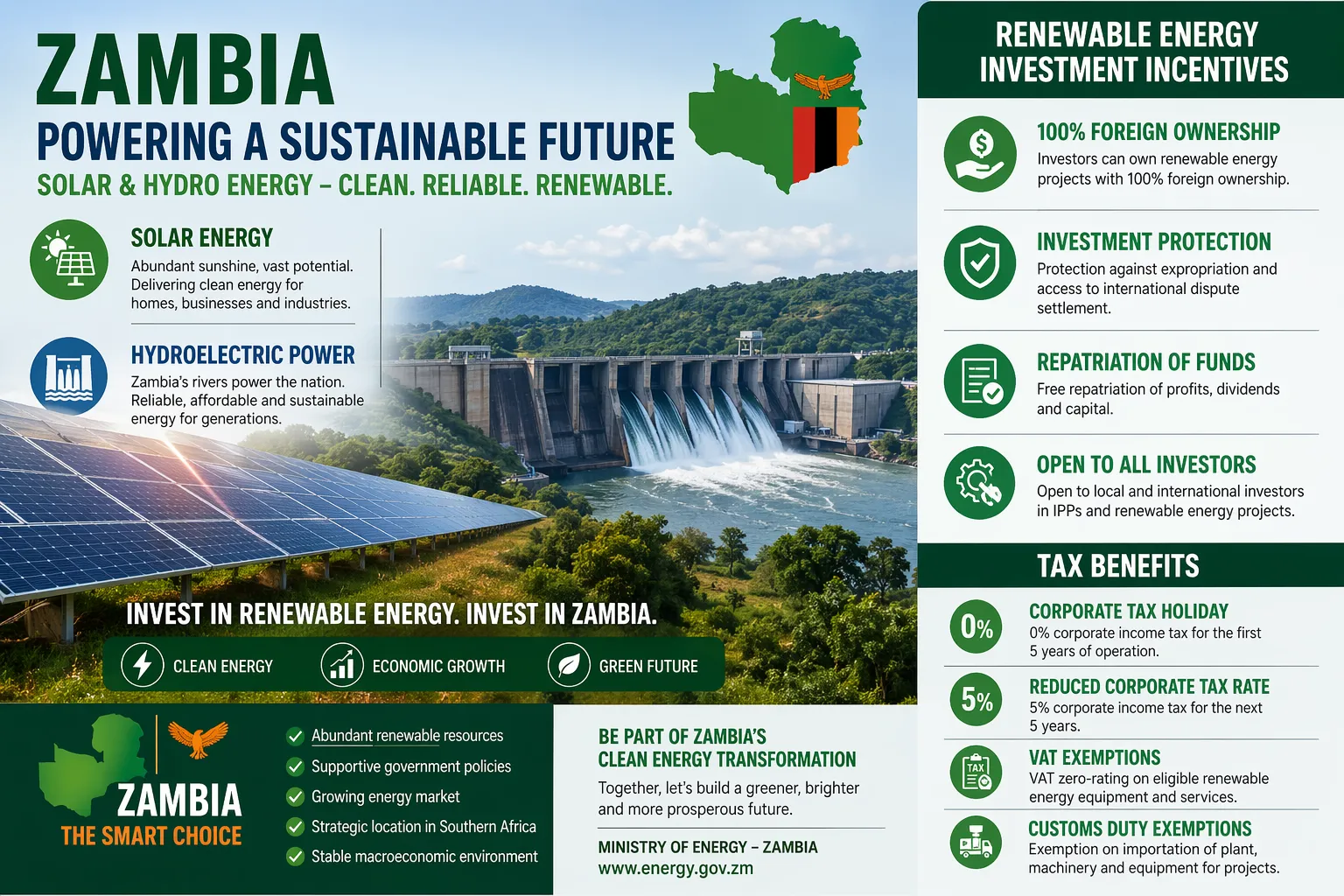
For renewable energy developers, this means that solar panels, turbines, transformers, and related infrastructure can often be imported at reduced or zero duty, depending on how the project is structured and approved.
The strategic implication is clear. Investors who align their projects with priority sector classifications and secure the appropriate approvals can significantly lower their capital entry point.
Extended VAT Refunds: Unlocking Cash Flow Before Operations Begin
While duty relief reduces upfront costs, VAT policy plays an equally important role in shaping project economics.
Zambia operates a VAT system where registered businesses can claim back input VAT incurred during the course of operations. However, renewable energy projects face a unique challenge. They often incur substantial costs long before generating revenue.
This is where the concept of “intending trader” status becomes critical. It allows investors to register for VAT before commercial operations begin and claim back VAT on eligible inputs.
Historically, the window for claiming these refunds was limited, creating pressure on investors to move projects quickly into production. Delays, which are common in infrastructure projects, could result in lost claims.
The 2026 reforms address this directly.
The government has extended the VAT refund claim period for hydroelectricity projects from seven years to ten years for pre-operational expenditures.
This extension is more than a technical adjustment. It fundamentally changes the risk profile of energy investments.
Renewable energy projects, particularly hydro and large-scale solar, often face delays due to environmental approvals, financing arrangements, and construction challenges. A longer VAT claim window provides breathing room, ensuring that investors can recover input VAT even if projects take longer than expected to become operational.
From a cash flow perspective, this is a significant advantage. VAT refunds can represent a substantial portion of project costs, and the ability to recover them over a longer period reduces financial strain during the development phase.
The 10-Year Claim Window: A Structural Shift in Investment Planning
The introduction of a 10-year VAT claim window is one of the most consequential policy changes for renewable energy investors in Zambia.
Traditionally, infrastructure investments in Africa have been constrained by short policy timelines that do not align with the realities of project development. The extension to ten years signals a recognition that energy projects require long-term planning and flexibility.
This change aligns Zambia more closely with global best practices, where infrastructure incentives are designed to accommodate extended development cycles.
It also creates new strategic opportunities for investors.
Projects that may have previously been considered too complex or too slow to develop can now be re-evaluated. Investors have more time to secure financing, complete feasibility studies, and navigate regulatory approvals without the pressure of losing tax benefits.
This is particularly relevant for diaspora investors who may not be physically present in Zambia and often rely on phased investment approaches.
The longer claim window allows for more deliberate planning and reduces the risk of premature capital deployment.
Beyond Generation: Incentives Across the Energy Value Chain
One of the most important shifts in Zambia’s energy policy is the recognition that investment must extend beyond generation.
The extension of duty relief to transmission and distribution reflects a broader understanding of the energy ecosystem. Power generation alone does not solve energy shortages. Electricity must be efficiently transmitted and distributed to end users.
By incentivizing investment across the entire value chain, Zambia is creating a more balanced and sustainable energy sector.
This approach also opens up new opportunities for investors.
Rather than focusing solely on large-scale power plants, investors can explore opportunities in grid infrastructure, mini-grids, off-grid solutions, and energy storage systems.
Off-grid energy projects, in particular, benefit from additional incentives, including zero percent import duty on capital goods and accelerated depreciation allowances for qualifying investments.
This diversification of opportunities allows investors to tailor their strategies based on capital availability, risk tolerance, and technical expertise.
Strategic Implications for Diaspora Investors
For diaspora investors, Zambia’s renewable energy incentives present both opportunity and complexity.
The opportunity lies in the ability to enter a high-growth sector with structured support from government policy. The combination of duty relief, VAT refunds, and extended claim windows creates a favourable investment environment.
The complexity lies in execution.
Accessing these incentives requires careful structuring, proper registration, and ongoing compliance. Investors must ensure that their projects are classified correctly, that all imports are documented, and that VAT claims are submitted in accordance with regulatory requirements.
Failure to meet these conditions can result in the loss of benefits.
Diaspora investors must also consider operational challenges, including project management, regulatory navigation, and local partnerships.
The most successful investors are those who combine financial capital with strong local execution capabilities.
The Role of Policy Consistency and Institutional Support
Zambia’s incentive framework reflects a broader commitment to policy consistency and investor support.
In addition to fiscal incentives, the government has introduced complementary measures such as the Energy Single Licensing System and frameworks for open access to electricity networks.
These initiatives reduce administrative complexity and improve transparency, making it easier for investors to navigate the regulatory environment.
Institutional support, particularly through investment agencies and regulatory bodies, further enhances the investment climate.
For investors, this means that incentives are not operating in isolation. They are part of a broader ecosystem designed to facilitate investment and ensure project success.
Conclusion: Incentives Are Only Valuable If Properly Captured
Zambia’s renewable energy incentives are among the most compelling in the region, but they are not automatic.
Duty relief reduces capital costs. VAT refunds improve cash flow. The 10-year claim window provides flexibility and reduces risk. Together, these incentives create a powerful framework for investment.
However, the value of these incentives depends entirely on how they are applied.
Investors who fail to structure their projects correctly, who overlook compliance requirements, or who underestimate the importance of documentation risk leaving significant value on the table.
The difference between an average project and a highly profitable one often lies in how well these incentives are understood and utilized.
Call to Action: Structure Your Energy Investment for Maximum Advantage
If you are considering investing in renewable energy in Zambia, the time to act is now.
Start by understanding how duty relief, VAT refunds, and the extended claim window apply to your specific project. Engage experienced local advisors who can guide you through the regulatory process and ensure compliance from the outset.
Structure your investment to align with priority sector classifications and take full advantage of available incentives.
Zambia has created a framework that rewards informed and strategic investors. The opportunity is significant, but capturing it requires precision, planning, and execution.