.png)
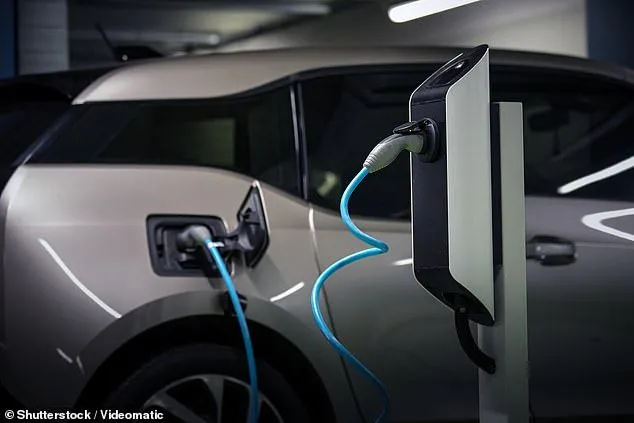
Zambia’s electric vehicle landscape has shifted from a niche curiosity to a structured investment opportunity in under three years. The catalyst was a simple but powerful fiscal intervention: the complete elimination of customs duties on imported electric vehicles and their attendant accessories. The policy, introduced in 2025, covers electric motorcycles, cars, buses, and trucks, as well as charging systems and related equipment. Importers now enjoy full customs duty exemption, a benefit that dramatically lowers the upfront cost of EVs and makes them competitive with traditional gasoline and diesel vehicles. The government has further sweetened the deal by reducing excise duty on hybrid passenger vehicles from 30% to 25% and introducing a VAT exemption for electric vehicles manufactured or assembled within Zambia.
The numbers tell the story of a market awakening. Before the customs duty removal, Zambia’s electric vehicle fleet was almost invisible. In July 2023, there were just 62 electric vehicles registered in the entire country. By the end of July 2025, that figure had climbed to 269, representing growth of over 330% in just two years. While 269 vehicles may seem modest against Zambia’s total vehicle population of over 823,000, the trajectory is unmistakable. Every EV that replaces a potential internal combustion engine purchase represents a shift in consumer and business behavior, and the momentum is building.
The fiscal incentives have created a price advantage that did not exist before. While importers still pay VAT at 16% on the cost, insurance, and freight value of imported EVs, the removal of customs duty eliminates a significant cost layer that previously made EVs uncompetitive against the flood of used Japanese vehicles that dominate Zambia’s roads. A typical used internal combustion engine vehicle imported from Japan arrives at a price point that is difficult for new EVs to match, but the duty exemption, combined with Zambia’s abundant and low-cost hydropower, changes the total cost of ownership equation in favour of electric. For fleet operators and businesses with predictable mileage, the lower operating costs of EVs now outweigh the higher upfront purchase price over the vehicle’s lifetime.
The investment opportunity extends far beyond importing vehicles. In July 2025, the Zambian government signed a landmark US$20 million green investment agreement with EVC Investments, a deal that signals the direction of travel for the sector. The memorandum of understanding, signed during the Invest in Zambia International Conference and witnessed by President Hakainde Hichilema, covers four key components: the importation of electric vehicles for both personal and commercial use, the establishment of solar-powered EV charging stations in major cities, a feasibility study for setting up an electric vehicle assembly plant in Zambia, and solar power generation to support the charging network and contribute to the national grid. This is not a narrow vehicle import deal. It is a vertically integrated play spanning charging infrastructure, renewable energy, and local assembly.
The charging infrastructure opportunity is particularly acute. Zambia’s charging network remains in its infancy, with most public charging points clustered in urban hubs like Lusaka and Ndola. Rural areas lack dedicated EV charging facilities entirely, and the majority of existing chargers are slow Level 1 systems. Fast-charging stations are scarce outside major commercial zones. This gap is not a barrier to investment; it is the investment opportunity. The government has introduced mandatory licensing and safety standards for EV charging stations, creating a regulated framework for private operators to enter the market. The US$20 million EVC Investments deal includes solar-powered charging stations, a model that leverages Zambia’s abundant sunshine to reduce reliance on an already strained national grid. For investors, the opportunity lies in building the network before EV adoption reaches critical mass, securing prime locations along major transport corridors and in urban centers.
The Zambian government has made clear that it sees electric mobility as more than a consumer trend. Secretary to the Cabinet Patrick Kangwa has directed relevant line ministries and agencies to accelerate the procurement of electric and hybrid vehicles, framing the initiative as essential to reducing fuel import costs and promoting environmental sustainability. In March 2026, the United Nations Development Programme partnered with the Ministry of Green Economy and Environment to launch a US$150,000 project aimed at catalyzing Zambia’s transition to e-mobility through policy development, investment readiness support, and demonstration projects. At the launch, Kangwa emphasized that the opportunity extends beyond vehicles to the entire ecosystem—charging infrastructure, grid services, assembly, maintenance, software, and financing platforms—where jobs and local enterprise will grow.
Perhaps the most strategic dimension of Zambia’s EV ambitions lies in battery manufacturing and mineral beneficiation. Zambia is Africa’s second-largest copper producer, and copper is the essential raw material for electric vehicle motors, batteries, and wiring systems. The government has prioritized the manufacture of electric vehicle batteries and critical mineral value chains, designating the Copperbelt region for an industrial park that will house an EV battery and critical minerals value chain plant. In April 2025, the Zambian cabinet approved the country’s membership in the Global Battery Alliance, a coalition of stakeholders working to ensure a sustainable and responsible battery value chain. The global battery electric vehicle market is projected to grow from US$8.8 trillion in 2025 to US$46 trillion by 2050, a six-fold increase that offers a massive opportunity for Zambia to solidify its role in the global EV supply chain.
The policy framework supporting this transition is maturing rapidly. The Zambia Development Agency has designated the manufacturing and assembly of electric vehicles and motorcycles as priority sectors, offering exclusive investment incentives including zero percent customs duty on electric vehicles, motorbikes, and supporting infrastructure such as charging systems, as well as zero percent customs duty on imported motorcycles and tricycles in complete knockdown state for local assembly. The Green Economy and Climate Change Act provides the legislative foundation for carbon markets and green investment, while the Bank of Zambia’s green finance guidelines are creating pathways for climate-aligned lending.
The commercial logic for early movers is compelling. Africa’s electric vehicle market is projected to grow from US$5.06 billion in 2026 to US$20.39 billion by 2031, expanding at a compound annual growth rate of 32.15%. Zambia is positioning itself to capture a share of this growth not merely as a consumer market but as a manufacturing and value-addition hub. The combination of zero customs duty on EV imports, abundant renewable hydropower, strategic copper reserves, and a government actively courting battery manufacturing investment creates a unique value proposition that few African countries can match.
Conclusion
The challenges are real. Charging infrastructure remains sparse outside major cities. Grid reliability is inconsistent, though solar-powered charging offers a workaround. Consumer awareness and access to affordable financing for EV purchases are still developing. But these are the frictions that create opportunity. The investors who build the charging networks, establish the assembly plants, and develop the financing products that bridge the affordability gap will not be serving a market that already exists. They will be creating the market as they build it. Zambia’s electric vehicle revolution is not a distant forecast. It is a live investment frontier, and the customs duty exemption is the open door.